Myths of Indo Pak History-Part One
Posted by Author on
in
Blog
08
49
Myths ,Distortions and Misconceptions of Indo Pak History-Part One
    |
Myths ,Distortions and Misconceptions of Indo Pak History-Part One A Chapter of the book The Sepoy Rebellion of 1857-59 by Agha.H.Amin 17 August 1998 | |||||||||||||||||||||||||||||||||||||||||||||||||||||||||||||||||||||||||||||||||||||||||||||||||||||||||||||||||||||||||||||||||||||||||||||||||||||||||||||
The Martial Races Theory and its Consequences The sepoy war of 1857 gave birth to a new theory in The theory was based on “ C-in-C in A cursory glance at the history of Indo-Pak subcontinent is enough for even a layman to understand that most of the invasions of India took place originating from areas north of Khyber Pass or west of Quetta i.e. Persia etc. The Mughals after 1526 recruited from Hindu Rajputs, Muslim Pathans, Muslim Rajputs, some Muslim Punjabis and Muslim Baloch, but the preference was given to trans-Indus races, mostly Pathans or Persian speaking, or to Hindu Rajputs. The EEIC since it made its entry from the east had no choice but to recruit from The rebellion of 1857 changed British perceptions and keeping in view the political reliability as well as the administrative convenience factor the British decided to recruit mostly from the north west i.e. Punjab and Frontier provinces of India and the Gurkhas from Nepal. This change started from 1857 but became significant only around 1895. Even reliability was not the only factor. Because the
In the 1880 and 1890s it was widely believed that the Indian army was supposed to face the Russian threat originating from Charles Chenevix Trench went further in explaining this British bias, he said “Brahmins had been prominent in the Mutiny, and their diet and prejudices though somewhat illogical by stating as following: “The Madrasi soldier was smallish, blackish and rather low caste. The Mahratta was also in origin of no very high caste, and smallish to hoot. The fact that his grandfather had held  It must be noted that the first Afghan was fought by a largely Hindu based army. Whatever the initial British failures, the British won the First Afghan war giving It would be false and erroneous, however, to assume that the British immediately changed the class composition of the Indian Army (Bengal Army in particular) in the years following 1857. In this regard the British quality of patience and subtlety in terms of long-term thinking is admirable. They still continued recruitment from the areas around The major factor in the anti-Hindustani/anti-Maratha/anti-Madrasi bias was the influence of Lord Roberts who remained the C-in-C of Madras Army and more importantly that of Bengal Army from 28 Nov 1885 to 7th April 1893568. 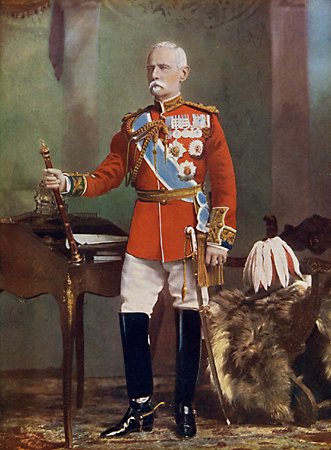 Robert played on the fears of Russian threat to India and succeeded in convincing the Viceroy and India Office to significantly change the class composition of the Bengal Army from a mixed affair to a largely Punjabised army dominated by Punjabi Muslims followed by Sikh Pathans and Gurkhas. Thus the “Martial Races Theory†had its origin in the mind of Lord Roberts and was not based on any significant and convincing conclusions deducted from war performance; and I mean comparative war performance of Hindu versus Muslim or Hindustani/Madrasi versus Punjabi/Pathan. Political reliability, however, became more serious as a factor as education increased in areas east of   Thus statistics show a major change in British recruitment policy in the period from 1885 to 1914569:-
Ethnically this came to the following Regional strength in terms of numbers of “Infantry Companies:--
Further another major change took place in 1895. The three armies i.e. in Bengal Madras and Henry Lawrence one of the eminent Lawrence Brothers made a very subtle remark in late 1840s. He said “Courage goes much by opinion; and many a man behaves as a hero or a coward, according as he considers he is expected to behave. Once two Roman Legions held 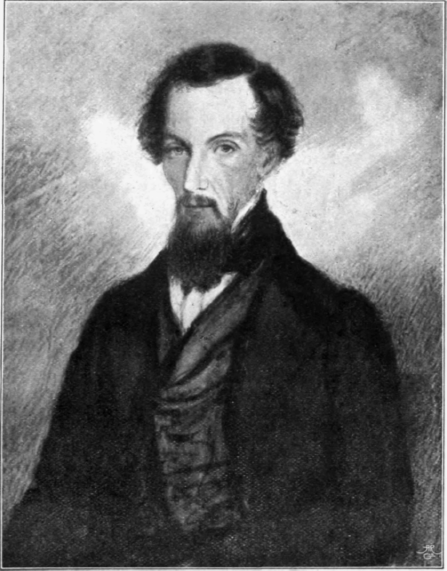 Even many Britishers knew that there were no martial races. But Robert remains the culprit for having introduced a bias in recruitment. A bias which became a policy and has had a negative fact at least in the political situation in The theory of martial races was tested and convincingly disproved in the First World War. The Mahrattas who had been dismissed as non-martial before First World War performed well during the First World War. In this regard particularly prominent was the battle performance as a unit of the 103, 110 and 117 Mahrattas at Kutal Amara against the Turks. At Sharqat the 114 Mahrattas with just three British officers played a decisive role in the defeat of the Turks 572. In any case a major change took place in the class composition of the Indian Army which is evident from the class composition of Indian Army in 1914 573:- a. Infantry:-(Total Companies-1096) 1. 431 Companies- Wholly Punjabi. 2. 221 Companies-Paltry Punjabi b. Cavalry:- (Total 155 Squadrons) 1. 95.5 Squadrons- Wholly Punjabi 2. 47.5 Squadrons-Partly Punjabi Despite this preponderance the non-Punjabi Hindu Gurkhas and Hindu Garhwalis did well in the Indian Army in WW One. Above all theoretically at least the Punjabi Muslims who were the largest community in the fighting arms should have won the maximum number of VCs, but this did not happen. The intention behind the whole argument is to prove that bravery has little connection with race or religion. The theory of “Martial Races†influenced the post-1947 Pakistani Politics in a negative way. The new state was a federation composed of five nationalities. The army due to pre-1947 British policy was largely Punjabi. It was perceived by Sind Baluchistan and
This myth was largely disproved in 1965 when despite having more sophisticated equipment, numerical preponderance in tanks and the element of surprise the Pakistan Armoured Division miserably failed at Khem Karn merely due to poor and irresolute leadership at the brigade and divisional level to a complete extent and even regimental level to a partial extent. Meanwhile the army employment in Related Video
Related Photo Post a Comment | |||||||||||||||||||||||||||||||||||||||||||||||||||||||||||||||||||||||||||||||||||||||||||||||||||||||||||||||||||||||||||||||||||||||||||||||||||||||||||||