
The Ongoing Taliban War in Afghanistan- A Brief Assessment
Subject:Â The Ongoing Taliban War in Afghanistan- A Brief Assessment
Â
The Ongoing Taliban War in Afghanistan- A Brief Assessment
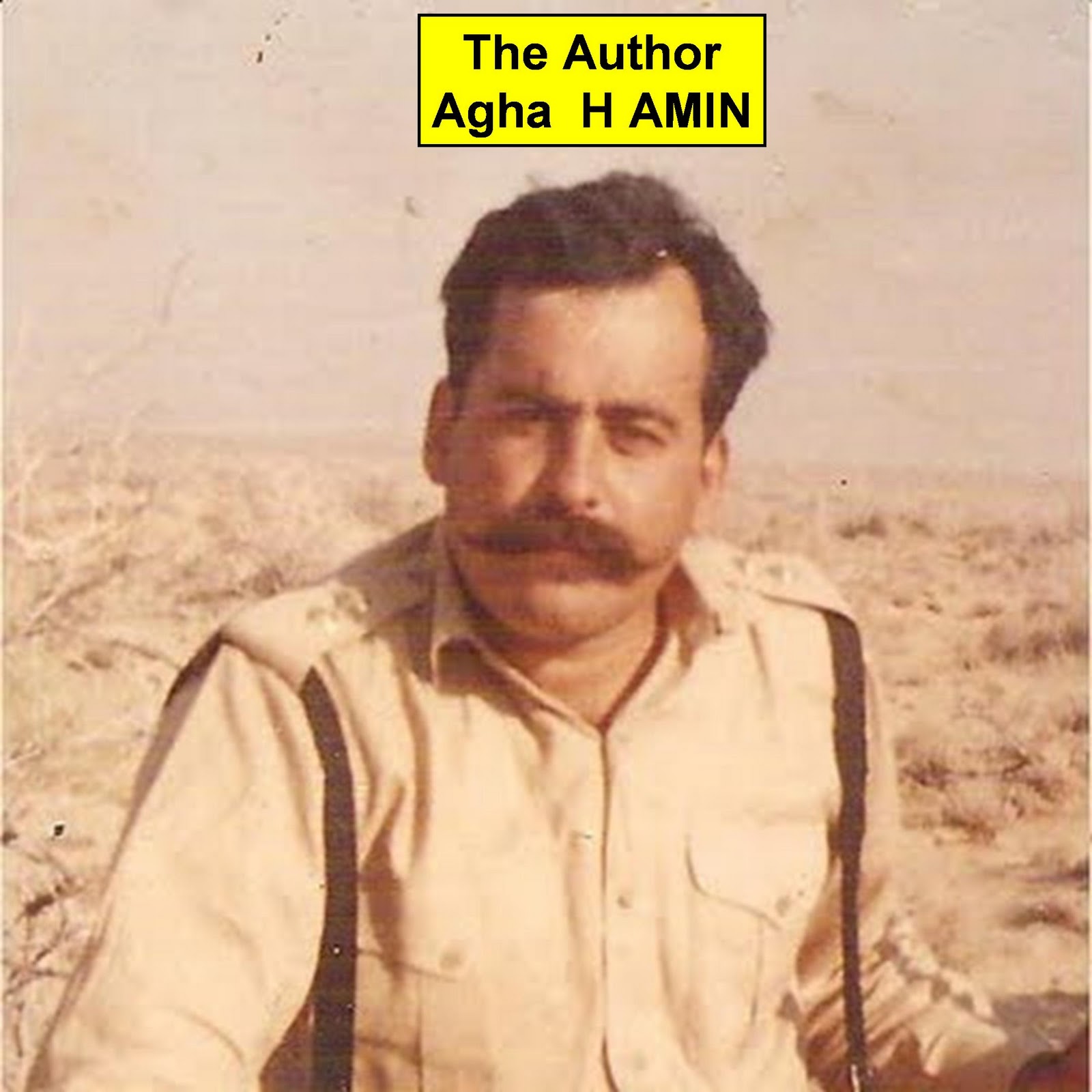
A.H Amin
Published in Defence Journal ,October 2007
Â
Â
Â
The Taliban War in Afghanistan has its origins in the Afghan Revolution of 1978.At that time Khalq and Parcham were the two key groups of the Afghan Leftists.The Khalq was the more rigid as well as extremist while the Parcham was more flexible, opportunistic and urbanized.The Khalq in turn had two groups the Pro Tarraki Khalqis and the Pro Hafizullah Amin Khalqis.

 As the Afghan War intensified after the Soviet intervention in Afghanistan in December 1979 just like the USA intervened in November 2001 the war became very complicated.The new Afghan Intelligence initially known as AGSA headed by the indomitable Sarwari was later reorganized by Dr Najeeb and was known as the KHAD.When Dr Najeeb became the Afghan President in 1986 the KHAD was headed by Ghulam Farooq Yaqubi from 1986 till his sad suicide in 1992.During this time the KHAD succeeded in having various secret protocols with various Afghan leaders from various factions of the so called Afghan Mujahideen.Most of these protocols were with non Pashtun Mujahid groups.Thus as a result the non Pashtun Mujahid groups were brought closer to the leftist regime and since they were seen as moderates the USSR saw them as future allies in Afghanistan.As a result the non Pashtun areas of the north were relatively undestroyed while the brunt of destruction was borne by Pashtun areas of Afghanistan.
General Yaqubi a great intelligence professional knew that if the Mujahids occupied Kabul he was a dead man.He destroyed many secret documents and killed himself when the Mujahids occupied Kabul abandoned by the Khalqis and Parchamis to them for the sake of peace.
 When Kabul was abandoned by the Khalqis and Parchamis in April 1992 following the last minute betrayal of General Dostum a diehard Parchami till then the Afghan leftists dissolved the party and the Pashtuns joined Hekmatyar's Hizb e Islami while the non Pashtuns joined Ahmad Shah Massouds group of Jamiat I Islami.
 The ensuing civil war which started after the Mujahid (so called) occupation of Kabul in April 1992 continued till November 2001 when the USA launched Operation Enduring Freedom.During this period a new power alignment took place.The Russians,Iranians and Indian Governments became patrons of the Non Pashtun Groups later known as the Northern Alliance while the Pashtun Groups initially Hikmatyar and later Taliban were supported by Pakistan as well as Saudi Arabia.
 In a crude way the struggle drifted from ideological lines to ethnic lines with Parchamis who were mostly non Pashtuns joining the Jamiat of Massoud later known as Northern Alliance while the Khalqis who were Pahtuns joined Hekmatyar and later the Taliban.
 The US invasion of Afghanistan was launched with internal collaboration of the Northern Alliance a largely Non Pashtun dominated alliance against the Taliban who were largely Pashtun.True that the Northern Alliance had some lightweight Pashtuns like Abdul Haq , Abdul Qadeer and Siaf , it was a largely non Pashtun group.This led to an ethnic war in Afghanistan in which the Pashtun majority was pitched against the non Pashtun minority which was a US ally.It became immaterial whether a man was a so called Mujahid or a Khalqi or a Parchami.The dividing line became language i.e whether you were a Pashtun or a non Pashtun.The US tried to change this impression first by introducing Abdul Haq and later Hamid Karzai but the popular perception remains that Afghanistan is no longer a Pashtun dominated country. Operation Enduring Freedom the US operation to invade and occupy Afghanistan in late 2001 was hailed as a new kind of war in the US press.Till to date there is no tangible proof that this operation has succeeded.
 According to US claims (Refers - Strange Victory: A critical appraisal of Operation Enduring Freedom and theAfghanistan war- Carl Conetta-2002-PDA Monograph # 6 , 30 January 2002)  following was achieved :--
Â
1.     A reasonable estimate is that 3,000 to 4,000 Taliban coalition troops died, including those killed in battle, captivity, and by strategic bombardment.(Refers- Kirk Spitzer, "Green Berets outfought, out thought Taliban," USA Today, 7 January 2002, p.1)  Among these dead may be 600-800 "Afghan Arabs" affiliated with Al Qaeda (out of an original total of 2,000-3,000). Notably, only a fraction of Al Qaeda fighters -- perhaps 25 percent -- are pledged members of the organization; the remainder are foreign volunteers brought to Afghanistan to fight in the civil war under Al Qaeda auspices.
2.     Approximately 7,000 Taliban and foreign troops were prisoners as of 15 January; less than 500 of these had been transferred to US custody. A disproportionate number of the prisoners held by the Northern Alliance militias were foreign fighters, especially Uzbek and Pakistani.
3.     Most of the top Taliban leadership has survived the war and eluded capture; many are in Pakistan and seeking to re-integrate into Afghanistan . Of more than three dozen Taliban leaders on the Pentagon's "wanted list," more than 12 have been killed, injured or have defected. Â
4.     At least eight of the 20 top Al Qaeda leaders and aides pursued by the Pentagon in Afghanistan are believed dead. However, only two had been reported captured as of 15 January. Eleven training camps affiliated with Al Qaeda, and many other Al Qaeda facilities in Afghanistan, have been destroyed or overrun.
The same US observer analysed US success or failure as following :--
Â
1.     The Alliance victory and Taliban collapse profoundly altered the national and regional strategic situation in several ways -- none of them auspicious in terms of long-term stability:
Â
2.     First, the rapid victory of the Alliance and collapse of the Taliban released centrifugal tendencies throughout Afghanistan , giving warlordism, banditry, and opium production a new lease on life.  This essentially erased the one positive feature of the Taliban period. An immediate effect was the aggravation of the country's humanitarian crisis.  A longer-term effect will be greater difficulty in building a unified polity and resilient civilian authority.
3.     Second, the advance of the Alliance and defeat of the Taliban altered the principal lines of opposition in Afghan society. Rather than following a "Taliban versus anti-Taliban" axis, conflict reoriented along purely ethnic, tribal, and sect lines. Within this, the position of Tajik and Uzbek minority interests advanced disproportionately. This will likely lead to a new bipolar configuration in the country: Pashtun versus non-Pashtun. The ethnic reframing of the Afghan struggle altered the political implications of US military operations in the country, which had focused almost exclusively on Pashtun areas since late-November.
4.     Third, the increased salience of ethnic, tribal, and sect lines of division also increased the centrifugal pressures on the international coalition supporting the operation. Notably, the Alliance victory had substantially increased Russian influence in Afghanistan , contrary to US interests and to the dismay of both Pakistan and Iran. Indian interests (tied to the Tajik militias) also advanced substantially. These developments increased the prospects for intensified regional contention over Afghanistan.
Â
This is not a brief written by an ISI general but the expert analysis of a US scholar. |
Â
The Afghan mission, NATO's first deployment outside of Europe or the US, is the alliance's biggest ground operation in its history with 35,000 soldiers currently in the country. The majority of these troops hail from theUS and the UK. The ISAF currently has five regional commands in Afghanistan: north, south, east, west and Kabul . The ISAF's headquarters are at Camp Warehouse , 16 kilometers east of Kabul.
According to Brigadier General Patrick de Villiers of France, the ISAF's mission in Kabul is to hold Taliban insurgents in check while winning the hearts and minds of the local population by pursing small development projects in conjunction with local leaders to improve living standards while respecting local religion and culture.The same generally is the stated NATO/ISAF mission in Afghanistan.
The Turkish Armed Forces will lead the Kabul Regional Command mission until 6 December, when Italy takes the helm until August 2008.
Some Facts and Figures
Â
NATO troops breakdown in Afghanistan as of early 2007 (based on interviews with various ISAF officers and authors own estimates)
United States, 12,000 |
Â
The present situation is that the Taliban are controlling large parts of the following provinces :--
Â
1.       Ghazni (Andar District,Muqur) At least 30 % of the province by day and 60 % after sunset till dawn) |
| 2.       Zabul (At least 75 % of the province) |
| 3.       Uruzgan ( At least 55 % of the province) |
| 4.        Helmand (At least 80 % of the province) |
| 5.       Paktika (At least 20 % of the province) |
| 6.       Khost (At least 20 % of the province) |
| 7.       Paktia (At least 10 % of the province) |
| 8.       Farah (At least 55 % of the province) |
| 9.       Kunar (At least 20 % of the province) |
| 10.    Laghman (At least 20 % of the province) |
| 11.    Kapisa (Tagab district) |
| 12.     Kandahar ( at least 45 % ) |
Communications :---
Â
1.     Kabul –Torkham Highway is 90 % safe but there have been incidents of attacks on oil tankers.Many of these are however insurance frauds done by owners of oil tankers coming from Pakistan or by their crew who first sell the fuel and then put the tankers on fire.
2.     Kabul-Kandahar Heart Highway :-- It is unsafe for any kind of civilian traffic between Muqur in Ghazni till Shahr e Safa in Kandahar and from Maiwand in Kandahar Province till Farah Rud and Adraskan in Herat Province in between 1600 in the evening till dawn.
3.     Kandahar-Spin Boldak Highway :-- Safe during daytime but unsafe after 1600 till dawn.
4.     Kabul-Mazar-Hairatan Highway :-- Safe 24 hours except odd cases of robberies.
5.     Kabul-Kunduz-Bandar Sher Khan Highway :-- Safe 24 hours except odd cases of robberies.
Suicide Bombings :--
Â
My personal study indicates that 70 % of suicide attacks against US/NATO/Afghan National Army/Afghan National Police occurred in Kandahar and Helmand Provinces ,15 % occurred in Kabul Province and 15 % in Khost,Ningrahar,Ghazni and Kunar.This scribe personally witnessed three suicide attacks and did manage to capture one on the camera in September 2006.According to some statistics compiled by Century Foundation New York the approximate casualties were as following :--
According to the Associated Press the USA has suffered as of Friday, Sept. 28, 2007, at least 375 members of the U.S. military had died in Afghanistan, Pakistan and Uzbekistan as a result of the U.S. invasion of Afghanistan in late 2001, according to the Defense Department. The department last updated its figures Sept. 22, 2007.Of those, the military reports 249 were killed by hostile action.

According to US Think Tank Century Foundations updated report of September 2007 casualty breakdown in Afghanistan was as follows:---
Â
September 07, 2006
By the numbers: Casualties, Sept 2006
Here are the latest casualty figures I could find (Sept 7, 2006):
Â
Violence related deaths in past four months:Â Â Â 1600Â Â Â Â Â Â Â Â Source: AP
Coalition deaths since 2001:Â Â Â Â Â Â Â Â Â Â Â Â Â Â Â Â Â Â Â Â Â Â Â Â Â Â Â Â 466Â Â Â Â Â Â Â Â Â Source: CNN
Non-US coaltion deaths:Â Â Â Â Â Â Â Â Â Â Â Â Â Â Â Â Â Â Â Â Â Â Â Â Â Â Â Â Â Â Â Â Â Â 137
US wounded in action since 2001:Â Â Â Â Â Â Â Â Â Â Â Â Â Â Â Â Â Â Â Â 893Â Â Â Â Â Â Â Â Â Source: CNN
Â
Breakdown of NATO/ISAFÂ Â Casualties (Source Century Foundation/CNN)
US:Â Â Â Â Â Â Â Â Â Â Â Â Â Â Â Â Â Â Â Â Â Â Â Â Â Â Â Â Â Â Â Â Â Â Â Â Â Â Â Â Â Â Â Â Â Â Â Â Â Â 329 |
| UK:Â Â Â Â Â Â Â Â Â Â Â Â Â Â Â Â Â Â Â Â Â Â Â Â Â Â Â Â Â Â Â Â Â Â Â Â Â Â Â Â Â Â Â Â Â Â Â Â Â Â Â 39 |
| Canada:Â Â Â Â Â Â Â Â Â Â Â Â Â Â Â Â Â Â Â Â Â Â Â Â Â Â Â Â Â Â Â Â Â Â Â Â Â Â Â Â Â Â Â Â Â 32 |
| Germany:Â Â Â Â Â Â Â Â Â Â Â Â Â Â Â Â Â Â Â Â Â Â Â Â Â Â Â Â Â Â Â Â Â Â Â Â Â Â Â Â Â Â 18 |
| Spain:Â Â Â Â Â Â Â Â Â Â Â Â Â Â Â Â Â Â Â Â Â Â Â Â Â Â Â Â Â Â Â Â Â Â Â Â Â Â Â Â Â Â Â Â Â Â Â Â 18 |
| France:Â Â Â Â Â Â Â Â Â Â Â Â Â Â Â Â Â Â Â Â Â Â Â Â Â Â Â Â Â Â Â Â Â Â Â Â Â Â Â Â Â Â Â Â Â Â Â Â 9 |
| Italy:Â Â Â Â Â Â Â Â Â Â Â Â Â Â Â Â Â Â Â Â Â Â Â Â Â Â Â Â Â Â Â Â Â Â Â Â Â Â Â Â Â Â Â Â Â Â Â Â Â Â Â 6 |
| Romania:Â Â Â Â Â Â Â Â Â Â Â Â Â Â Â Â Â Â Â Â Â Â Â Â Â Â Â Â Â Â Â Â Â Â Â Â Â Â Â Â Â Â Â Â 4 |
| Denmark:Â Â Â Â Â Â Â Â Â Â Â Â Â Â Â Â Â Â Â Â Â Â Â Â Â Â Â Â Â Â Â Â Â Â Â Â Â Â Â Â Â Â Â Â 3 |
| Holland:Â Â Â Â Â Â Â Â Â Â Â Â Â Â Â Â Â Â Â Â Â Â Â Â Â Â Â Â Â Â Â Â Â Â Â Â Â Â Â Â Â Â Â Â Â Â 3 |
| Sweden:Â Â Â Â Â Â Â Â Â Â Â Â Â Â Â Â Â Â Â Â Â Â Â Â Â Â Â Â Â Â Â Â Â Â Â Â Â Â Â Â Â Â Â Â Â Â 2 |
| Norway:Â Â Â Â Â Â Â Â Â Â Â Â Â Â Â Â Â Â Â Â Â Â Â Â Â Â Â Â Â Â Â Â Â Â Â Â Â Â Â Â Â Â Â Â Â Â 1 |
| Portugal:Â Â Â Â Â Â Â Â Â Â Â Â Â Â Â Â Â Â Â Â Â Â Â Â Â Â Â Â Â Â Â Â Â Â Â Â Â Â Â Â Â Â Â Â Â 1 |
| Australia:Â Â Â Â Â Â Â Â Â Â Â Â Â Â Â Â Â Â Â Â Â Â Â Â Â Â Â Â Â Â Â Â Â Â Â Â Â Â Â Â Â Â Â Â 1 |
| Â |
Â
Â
AN ASSESSMENT OF EVENTS
Â
The Taliban and USA had no conventional match so it was logical that the Taliban disintegrated initially in face of the US bombing offensive and later ground attacks of Northern Alliance as well as the US forces.
Â
The Taliban's started re-grouping after mid 2002 having realized that the USA and its NATO allies had sparse ground forces.Initially they targeted NGOs and construction companies but by 2004 they started applying the tactics learnt in Iraq in Afghanistan.
Â
By 2005 they were generally organized as regional battle groups under a command and control system.An assessment of this is shown on the map.Each regional group comprised a hard core of 150 to 350 and a total mobilized armed strength of 1000 to 2000 fighters.
Â
According to a study done by this scribe for an international client IEDs were initially imported from Datta Khel and Pishin but later each regional group started manufacturing their own IEDs.Weapons and munitions were bought from Iranian Baloch and Kurd smugglers or from groups in Central Asian Republics.Most of the weapons were smuggled via Iran.
Â
Taliban control over Helmand and South Nimroz ensured that they controlled the main drug transit routes hence this enabled them to maintain a strong leverage with Pakistani and Iranian Baloch tribes.

Â
The USA and its NATO allies appear to have the following strategy :---
Â
- Control the key airfields of Afghanistan with minimum strength.
- Hold Kabul in strength.
- Show piece patrolling in Southern Provinces giving the impression that the ISAF/NATO is active but in reality avoiding pitched battles or any heavy troop copmmitment.
- Rebuild the Afghan National Army and Afghan National Police.This may take many dccades.Actual fighting indicates that both the ANA and ANP have extremely limited value while operating independently.Thanks to US insistence the Afghan Army was destroyed effectively in the period 1989-92 and building a effective army may take many decades.
- It appears that the long term strategic purpose of Afghanistan was to dominate the regional states as well the resources by occupying airbases which would enable the USA to attack targets of its choosing , may they be WMDs or other installations.Effective countermeasures by President Putin of Russia however severely limited US influence in the Central Asian Republics.
- Pressurise/armtwist Pakistani into destroying the main Taliban bases in Waziristan and North Balochistan.

Â
The Taliban strategy is as following :---
Â
- Harass Kabul Herat Road disturbing container movements.
- Cause attrition on British-Canadian troops in Helmand and Kandahar the Pashtun heartland thus demonstrating to all Pashtuns in Afghanistan that the Talibans are a major player.
- Dominate the major drug production areas in the south and the main drug export routes thus financially sustaining the ongoing war.
- Carry out continuous suicide and IED\bombings in Kabul and surrounding area sapping morale Of anti Taliban forces and demoralising civilians.
- Carry out selective IED/Suicide Attacks against US Forces and US Civilans
- Targeting the Afghan National Police which was not completely disintegrated in 1988-92.The Taliban know that the hard core of the Afghan Government is the ANP trained by the indomitable Sayyid Gulabozai.The Afghan National Police has at least 25 % officers trained in ex USSR and is very professional as well as patriotic.Thus the attacks on Afghan National Police by the suicide bombers as well as IEDs.

Â

ANALYSIS
Â
Â
Â
The strategic challenges that the USA confronts are complex and challenging and the present US leadership lacks the strategic talent to find a solution.Just sitting in Afghanistan and Iraq is not the solution.If not a reverse it is certainly not a success for USA and its allies.And every day spent in Iraq and Afghanistan without striking at the real centre of gravity is a strategic failure of USA.
Â
Â
Â
Using the Northern Alliance as main Allies
Â
The USA was seen as friends of Non Pashtuns in 2001.This created an alienation and feeling of betrayal in Pashtuns both in Afghanistan and Pakistan .This fact was admitted even by US scholars.Professor Rasul Amin who is this scribe's personal friend offered a very interesting explanation of this US failure.According to Prof Rasul Amin who was also Afghanistan's first Education Minister the main US advisor who according to US decision makers possessed Solomon's wisdom about Afghanistan,Zalmay Khalilzad was a non Pashtun.Rasul Amin stated in various discussions that Zalmay was a Changharay ( of Hindu/Indian origin) and not a Pashtun.He thus carried a conscious as well as unconscious bias against Pashtuns.This led to his advocating a course in US policy as a result of which US position became very partisan and negative in the eyes of the Pashtun population.
Â
The USA achieved little by this favour ironically.The Northern Alliance's real allies and saviours were the Russians,Indians and Iranians and this remains the present position.To rub salt in the wound today the Northern Alliance propagates that they singlehandedly  removed the Taliban understating and under emphasizing the impact of US aerial bombardment on Taliban.Thus although without USA intervention the Taliban would still have been ruling Afghanistan,the USA failed to gained the goodwill that they deserved from the Northern Alliance.The Northern Alliance knows that their permanent allies are Russia,India and Iran while USA is a dangerous ally which can change its policy at any times.Thus US policy laid the foundation of a possible division of Afghanistan into Pashtun and non Pashtun parts.This may take a decade or more but a foundation has been laid.
Â
US strategy is not aimed at pacifying Afghanistan
Â
The force ratio of USA and its major NATO allies is so low that it is not designed to pacify or control whole of Afghanistan.The major US targets its appears were the airbases and those they occupied.These airbases will go a long way in enabling the USA to strike at a multiple number of targets in the region.This has already led to China and Russia becoming better allies and has not served US policy.
Â
Material motivation of various major participants exposed
Â
One good result of the war is the fact that materialistic motivation of many majopr participants has been exposed.When the USSR intervened in Afghanistan in 1979 the then Pakistani military regime adopted a policy of aiding Afghan rebel groups on the slogan of Jihad.Today with more than 20 Christian countries occupying Afghanistan and with Pakistan facing a more grave threat on its Western borders there is no talk of Jihad now.The motivation in 1979 was to get foreign aid and this has remained the motivation in 2001.The same is true for the so called Mujahids of 1979-1989.They fought a Jihad against a non Christian USSR and are now major vassals of more than 20 Christian countries occupying Afghanistan.
Â
Taliban a force to stay on the scene
Â
In pure military as well as political terms the Taliban are a force that will stay on the scene unless there is a major change in US strategy.This would not lead to US withdrawal but it would certainly make Afghanistan's Pashtun and non Pashtun divide deeper.The USA would be the loser as the Northern Alliance regards Russia as a more solid and reliable friend and ally.The Taliban will dominate the south and the drug trade and there dominance would ensure that the Pashtuns remain relatively uneducated.Thus fundamentalism would be strengthened in the Afghan South and the regional threat will remain functional.
Â
Taliban's Ability to acquire SAM capability will be a serious challenge to USA/NATO
Â
Presently the Taliban have no SAM capability but if they acquire this the whole balance in Afghanistan would seriously tilt against the Americans/NATO.
Related Video


![Spitzer: Can we defeat the Taliban? [CNN: 5-19-2011]](http://i.ytimg.com/vi/yQb-RY2u50E/3.jpg)
Post a Comment