
A Pakistani General gives a lesson on Pakistans History
Posted by Author on
in
Blog
08
49
Amin Globe Journal May 2001 The Political Life of Gen Babar
End Notes by Dr Andre
End Notes by Dr Andre
-
The Political Life of Gen Babar[1]
Conducted by A.H Amin

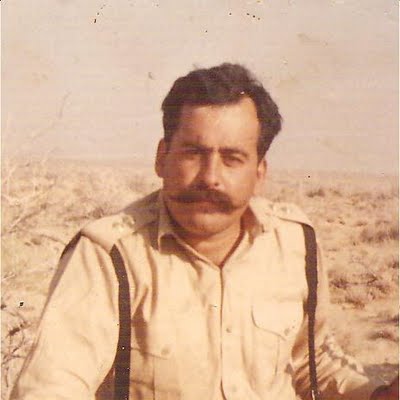
Agha.H.Amin
Published in Globe Journal May 2001

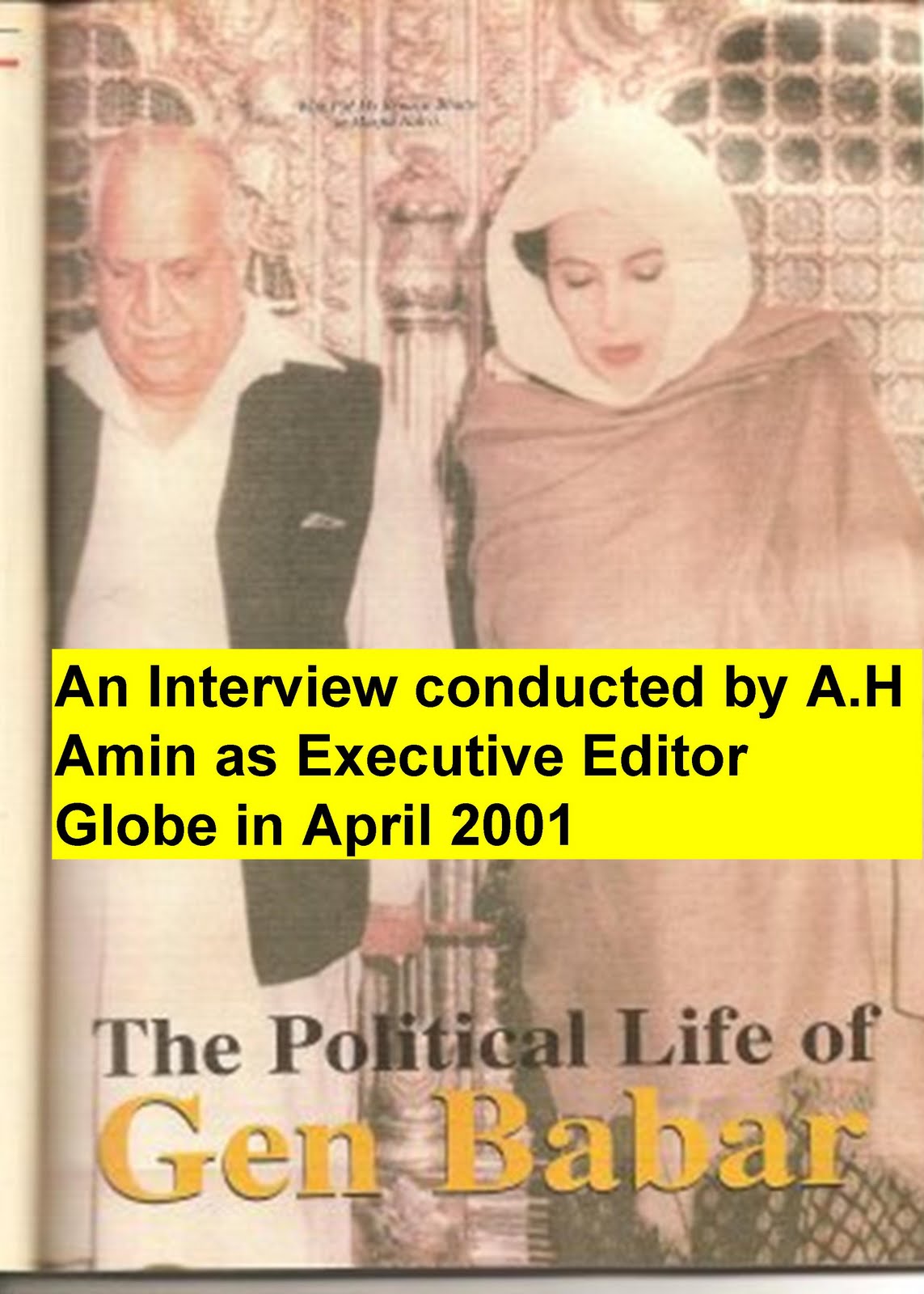
April 2001
Personal Life
1. Please tell us something about your early life before you joined the Army?
I was born inPeshawar Kandahar and had settled in the Peshawar Valley Quetta , Multan
After initial study of two years at aPrivate Public School Burn Hall School , then located at Baramula and Srinagar Dehra Dun Dehra Dun Meerut Lahore
2. Please describe your parents and their influence on your perception/personality?
My father and grandfather were the two most honest and upright people that I saw in life. I was greatly inspired by both of these individuals and inherited their basic traits. In character building the role of mother was more significant.
3. Please tell us about any incident in your early years that left a lasting impression on your personality ?
Two events left a particularly strong impression. One was the abject poverty and submissiveness of the Kashmiri Muslims, particularly the males owing to severe oppression by the Dogra rulers. However, the females were fairly aggressive in protecting their rights. The second significant incident was while proceeding toMeerut India , viz; 1948 (Kashmir); 1965 Rann of Kutch , 1965 (Indo-Pak War), 1971 (Indo-Pak War). In three of these I found myself in Kashmir !
4. How was your student life?
It was memorable. The missionaries at the convent inPeshawar
5. Any teacher who played a decisive role in formation of your perceptions/convictions?
There were many teachers who I can mention. There was Father Shanks, Father Moran, Father Louis a Dutchman who later died at Malakwal, Father Mallet, at Burns Haiz, Mr Catchpole and Mr E I Connolly, a Battle of Britain fighter pilot, who had already received a DSO and DFC (Bar) at the RIMC.
6. What was your opinion about Mr Bhutto[2] as you saw him as a Minister the period 1958-66?
I had seen Mr Bhutto as a Minister in 1958-66 as an Army Major and felt that he had great talents. From 1972 onwards I saw him far more closely as IG FC.
7. What do you have to say about the Balochistan problem of 1974-76?
This problem was created through the intrigues of Khan Abdul Qayyum Khan[3], the then Interior Minister. Qayyum was an arch intriguer and wanted to strengthen his party in Balochistan. Thus the problem in Lasbela was started due to his machinations. Mengal[4] was a patriot who was manoeuvred into a controversial role through Qayyum's intrigues. I may add that the motivation of taking the army to Balochistan was positive. Given the task even the FC could have done the job as we earlier did in Kakar Khurasan. Mr Bhutto was a bit impatient since all members of his family had not crossed the 50 year age mark. He wanted to do away with the Sardari System[5] and bring development in Balochistan. Regrettably, the Chief Secretary and the Corps Commander were brothers and this led to a much quicker employment of the Army.
8. What about theHyderabad
It is on record that Mr Bhutto wanted to withdraw the Army from Balochistan in 1976. The then Army Chief Zia[7] opposed this idea. In addition around the same time Mr Bhutto wanted to wind up the Hyderabad Tribunal. This was again opposed by Zia as Army Chief. Ironically Zia did exactly what Mr Bhutto wanted in 1977 rather than 1976. The two subjects were discussed in my presence in November 1976 at Dir. Zia had wanted to use these as excuses/pretexts for military take over. He was already in collusion with the opposition.

9. You were selected as Governor NWFP in 1974-75. How did this occur ?
Mr Bhutto had already seen me as IG FC (Inspector General Frontier Corps) and was keen to have me in the province as a Governor since the province was a political trouble spot and he wanted to integrate the tribal areas and organise the nascent Afghan resistance, a task, commenced by me in October '73 as IG FC.
10. So how was this stint?
We did well. During this period there were a large number of bomb blasts in the NWFP with Ajmal Khattak[8] and Azam Hoti[9] sitting inKabul Panjsher Valley
11. When didPakistan enter the Afghan scenario as a party, which was assisting the anti-Daud insurgents in Afghanistan
In October 1973 while I was serving as IG FC an Afghan named Habibur Rahman (Shaheed) came and contacted me about setting up a resistance movement inAfghanistan with active military assistance of Pakistan Afghanistan
12. What was the political and military aim of the Pakistani government of that time?
From 1947 till that date all Afghan governments had generally not been friendly towardsPakistan India USSR and China Iran USSR leadership may take the opportunity to move once more and invade Afghanistan
13. What type of assistance was provided to the Afghan resistance and which Pakistani agencies were involved?
We gave them basic infantry weapons, some specialised training in how to conduct guerrilla warfare under an SSG team[11] until it was discontinued on 05 July 1977 by Gen Zia, who lacked the strategic vision.
14. At what stage did the SSG enter the scene as the principal agency that trained the Afghan resistance?
They (a team) imparted training in the belief that they were training Frontier Corps personnel (all trainees were enlisted in the Frontier Corps before training)
15. What was the ISI[12] role inAfghanistan
It was a top secret affair and the ISI had no role. The secret was shared between Mr Bhutto, myself, Aziz Ahmad[13] and the then Army Chief Tikka Khan[14]. This was for obvious reasons. The Foreign Office could with, nonchalance deny if the issue was raised at UN or any other forum.

16. Who were the pioneers of the anti-Daud Afghan resistance?
These were Ustad Rabbani[15], Hikmatyar[16], Ahmad Shah Masood[17] and a host of others who came toPakistan
17. You have been a committed member of the PPP? At what stage did you decide that you must join Mr Bhutto's party?
I was impressed by Mr Bhutto's progressive policies since 1972. On 27 July 1977 after Martial Law Mr Bhutto personally requested me to join the PPP. I did so out of conviction once Mr Bhutto was out of power.
18. Why did Mr Bhutto select Zia as a COAS (Chief of Army Staff)?
There were a number of reasons and these were discussed with me personally by Mr Bhutto, while in detention at Murree. One was the pretended humility of Zia, and this disarmed Mr Bhutto into the belief that he would pose no threat to the nascent democracy. Secondly, his performance when he invited Mr Bhutto to the centenary celebrations of 11 Cavalry at Kharian. He took pains to ascertain Mr Bhutto's tailor inKarachi Jordan , where he killed a large number of Palestinians (Black September), Mr Bhutto was led to the belief that if he was so loyal to Jordan , he would be even more loyal to Pakistan Multan Pakistan Libya Kashmir in 1971 war. Gen Aftab and AB Awan had no command potential and were not suitable.


19. It has been said that a large number of PPP[19] tickets for 1977 elections were awarded to opportunists who were not sincere workers of PPP. Why did this happen?
It is good to be idealistic! However, in politics as in other fields of endeavour, the ground realities cannot be ignored. It is typical of us to select one aspect of an event and pass judgements rather than rationally analyse the problem in its entirety. Firstly, political parties, unlike dictatorship, perform under a manifesto or a programme rather than on whims as dictators generally do. Individuals, in consequence, are not of prime import as long as they subscribe to the basics/underlying philosophy of the manifesto. Judgement should only have been passed if the individuals had performed for a reasonable period and not abided by the party's basic philosophy/manifesto.
20. It has been asserted that Mr Bhutto was punished by some foreign powers/power for initiatingPakistan
Within hours of the declaration of an election programme/date the PNA[20] came into being and thus, through all means fair or foul thwarted the political process. As, in the ultimate, they were working at someone else's behest and according to someone else's agenda. It would be pertinent to recall Kissinger's remarks atLahore
Further more, in keeping with this/their programme some key leaders, of the PNA (detained at Sihala) thwarted efforts of reaching an agreement between the government and the PNA despite the fact that initial agreement to hold elections afresh was taken on May 12 1977 between the late Mufti Mahmood[21] and Mr. Z.A Bhutto in a meeting at the PM's house. Today, even Professor Ghafoor Ahmed, owing to belated pangs of conscience admits that the army moved in, despite an agreement having been clinched.
The bane of this country has been the repeated intervention of the army and thus frustrating political maturity and strengthening of political institutions. The four post-1988 interventions amply confirm this attitude/malaise of the Armed Forces.
It cannot be gainsaid that the military junta has failed in entirety in all interventions, and departed ignominously. The fate of the present element is yet to be seen but could be no different.
21. It has been said that Zia coup (he overthrew ruling Prime Minister Zulfikar Ali Bhutto in a bloodless coup d'état on 5. July 1977 and became the state's third ruler to impose martial law. He initially ruled as Chief Martial Law Administrator, but later installed himself as the President of Pakistan in September 1978.) was foreign inspired.
Yes, undoubtedly, the factors cited contributed to his selection as COAS. There was off course the American angle. They had picked Zia as suitable material atFort Leavenworth
22. How would Mr ZA Bhutto have behaved had he been in power when the Soviets invadedAfghanistan
Mr Bhutto laid the foundation of the Afghan resistance in 1973. He had the foresight and vision to do it. As a matter of fact we created the organisational network which was used by Zia and theUSA US Pakistan and Afghanistan Afghanistan today and Pakistan

If it is the threat from the South (India ) it is Pakistan today and Afghanistan Pakistan and Afghanistan Rome and request King Zahir Shah[22] to return as his father had done earlier, to lead a movement into Afghanistan
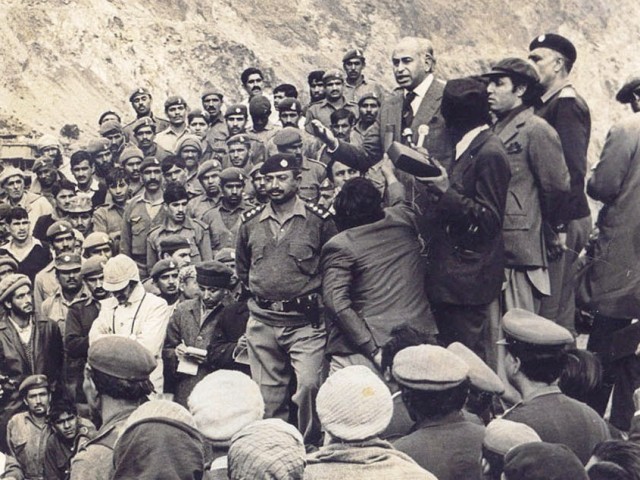
The caveat was that Zahir Shah could return as a constitutional monarch under the Constitution drafted by Mr Musa Shafiq, a former Prime Minister and the mentor/founder of the Hizb inAfghanistan Egypt ), then visit the Shah of Iran and finally arrive in Pakistan Pakistan Pakistan Pakistan
23. Why was the PPP unable to mobilise the masses around the time Mr. Bhutto was sentenced to death till his execution?
It would be recalled that the PPP workers made great sacrifices and the resistance put up by Mr. Bhutto himself during his incarceration proved a beacon light. He endured all the excesses with great courage and dignity. The workers on their part went to jail in the thousands! Every element of society (pressmen, lawyers) were brutalised and lashed. A large number of workers resorted to self-immolation. However, it was the leadership that eventually deserted them. Jatoi and Khar colluded with the army, proceeded abroad and despite being mixed up with the Indian intelligence agency RAW[23], later Mr Khar was never tried by the military! Hafeez Pirzada also married afresh and abandoned his leader! The worst instance was of the talented cousin Mr Mumtaz Bhutto[24], who not only abandoned Mr. Bhutto but also colluded with Zia. Maulana Niazi[25], Mir Afzal Khan[26] and a host of others initially endeavoured to take over the party. In February 1978, when the endeavour failed or was foiled and Begum Bhutto[27] was designated co-chairperson, they disappeared from the scene. Their political nemesis is abundant proof of their disloyalty and the party (workers) never accepted them in their fold. The most poignant scene was at Garhi Khuda Bux, when on one of the anniversaries, they were beaten up by the workers and had to flee barefooted in the scorching heat! It is to the credit of the workers, that, despite 11 years of repression and intrigue (formation of IJI by the ISI), they yet succeeded in bringing the party into government in 1988. Contrast this with the events of October 1999 and subsequently, when the main leadership (Nawaz Sharif[28] and family) of the so-called PML[29] (Nawaz) absconded toSaudi Arabia
24. It is being said in Sindh and Balochistan that had Mr. Bhutto not been from Sindh he would not have been executed but exiled like Mr. Nawaz Sharif. What is your opinion?
There is no doubt in this assertion. Initially the attitude of theLahore Punjab on the one side and those hailing from the smaller provinces (all dissenting) on the other.

 It was a replay of the Lahore High Court scenario. Moreover, no divided judgement has ever been affected but in this case Mr. Bhutto, hailing from a smaller province, was executed. The merit of the judgement is evident from the fact that it cannot be cited as a legal precedent. Foreign judicial/legal experts have termed it as judicial murder.
25. How would you assess Zia's Afghan policy?
It was based on sheer opportunism and personal interest. Initially, he lacked the vision and, therefore, suspended financing the movement. This resulted in break-up of movement from one to seven groups, each leader fending for himself. Secondly, when the Soviet invasion took place he did not form a government in exile, which could gain experience during the Jehad and be available when theGeneva Geneva
Personal Life
1. Please tell us something about your early life before you joined the Army?
I was born in
After initial study of two years at a
2. Please describe your parents and their influence on your perception/personality?
My father and grandfather were the two most honest and upright people that I saw in life. I was greatly inspired by both of these individuals and inherited their basic traits. In character building the role of mother was more significant.
3. Please tell us about any incident in your early years that left a lasting impression on your personality ?
Two events left a particularly strong impression. One was the abject poverty and submissiveness of the Kashmiri Muslims, particularly the males owing to severe oppression by the Dogra rulers. However, the females were fairly aggressive in protecting their rights. The second significant incident was while proceeding to
4. How was your student life?
It was memorable. The missionaries at the convent in
5. Any teacher who played a decisive role in formation of your perceptions/convictions?
There were many teachers who I can mention. There was Father Shanks, Father Moran, Father Louis a Dutchman who later died at Malakwal, Father Mallet, at Burns Haiz, Mr Catchpole and Mr E I Connolly, a Battle of Britain fighter pilot, who had already received a DSO and DFC (Bar) at the RIMC.
6. What was your opinion about Mr Bhutto[2] as you saw him as a Minister the period 1958-66?
I had seen Mr Bhutto as a Minister in 1958-66 as an Army Major and felt that he had great talents. From 1972 onwards I saw him far more closely as IG FC.
7. What do you have to say about the Balochistan problem of 1974-76?
This problem was created through the intrigues of Khan Abdul Qayyum Khan[3], the then Interior Minister. Qayyum was an arch intriguer and wanted to strengthen his party in Balochistan. Thus the problem in Lasbela was started due to his machinations. Mengal[4] was a patriot who was manoeuvred into a controversial role through Qayyum's intrigues. I may add that the motivation of taking the army to Balochistan was positive. Given the task even the FC could have done the job as we earlier did in Kakar Khurasan. Mr Bhutto was a bit impatient since all members of his family had not crossed the 50 year age mark. He wanted to do away with the Sardari System[5] and bring development in Balochistan. Regrettably, the Chief Secretary and the Corps Commander were brothers and this led to a much quicker employment of the Army.
8. What about the
It is on record that Mr Bhutto wanted to withdraw the Army from Balochistan in 1976. The then Army Chief Zia[7] opposed this idea. In addition around the same time Mr Bhutto wanted to wind up the Hyderabad Tribunal. This was again opposed by Zia as Army Chief. Ironically Zia did exactly what Mr Bhutto wanted in 1977 rather than 1976. The two subjects were discussed in my presence in November 1976 at Dir. Zia had wanted to use these as excuses/pretexts for military take over. He was already in collusion with the opposition.
9. You were selected as Governor NWFP in 1974-75. How did this occur ?
Mr Bhutto had already seen me as IG FC (Inspector General Frontier Corps) and was keen to have me in the province as a Governor since the province was a political trouble spot and he wanted to integrate the tribal areas and organise the nascent Afghan resistance, a task, commenced by me in October '73 as IG FC.
10. So how was this stint?
We did well. During this period there were a large number of bomb blasts in the NWFP with Ajmal Khattak[8] and Azam Hoti[9] sitting in
11. When did
In October 1973 while I was serving as IG FC an Afghan named Habibur Rahman (Shaheed) came and contacted me about setting up a resistance movement in
12. What was the political and military aim of the Pakistani government of that time?
From 1947 till that date all Afghan governments had generally not been friendly towards
13. What type of assistance was provided to the Afghan resistance and which Pakistani agencies were involved?
We gave them basic infantry weapons, some specialised training in how to conduct guerrilla warfare under an SSG team[11] until it was discontinued on 05 July 1977 by Gen Zia, who lacked the strategic vision.
14. At what stage did the SSG enter the scene as the principal agency that trained the Afghan resistance?
They (a team) imparted training in the belief that they were training Frontier Corps personnel (all trainees were enlisted in the Frontier Corps before training)
15. What was the ISI[12] role in
It was a top secret affair and the ISI had no role. The secret was shared between Mr Bhutto, myself, Aziz Ahmad[13] and the then Army Chief Tikka Khan[14]. This was for obvious reasons. The Foreign Office could with, nonchalance deny if the issue was raised at UN or any other forum.
16. Who were the pioneers of the anti-Daud Afghan resistance?
These were Ustad Rabbani[15], Hikmatyar[16], Ahmad Shah Masood[17] and a host of others who came to
17. You have been a committed member of the PPP? At what stage did you decide that you must join Mr Bhutto's party?
I was impressed by Mr Bhutto's progressive policies since 1972. On 27 July 1977 after Martial Law Mr Bhutto personally requested me to join the PPP. I did so out of conviction once Mr Bhutto was out of power.
18. Why did Mr Bhutto select Zia as a COAS (Chief of Army Staff)?
There were a number of reasons and these were discussed with me personally by Mr Bhutto, while in detention at Murree. One was the pretended humility of Zia, and this disarmed Mr Bhutto into the belief that he would pose no threat to the nascent democracy. Secondly, his performance when he invited Mr Bhutto to the centenary celebrations of 11 Cavalry at Kharian. He took pains to ascertain Mr Bhutto's tailor in

19. It has been said that a large number of PPP[19] tickets for 1977 elections were awarded to opportunists who were not sincere workers of PPP. Why did this happen?
It is good to be idealistic! However, in politics as in other fields of endeavour, the ground realities cannot be ignored. It is typical of us to select one aspect of an event and pass judgements rather than rationally analyse the problem in its entirety. Firstly, political parties, unlike dictatorship, perform under a manifesto or a programme rather than on whims as dictators generally do. Individuals, in consequence, are not of prime import as long as they subscribe to the basics/underlying philosophy of the manifesto. Judgement should only have been passed if the individuals had performed for a reasonable period and not abided by the party's basic philosophy/manifesto.
20. It has been asserted that Mr Bhutto was punished by some foreign powers/power for initiating
Within hours of the declaration of an election programme/date the PNA[20] came into being and thus, through all means fair or foul thwarted the political process. As, in the ultimate, they were working at someone else's behest and according to someone else's agenda. It would be pertinent to recall Kissinger's remarks at
 |
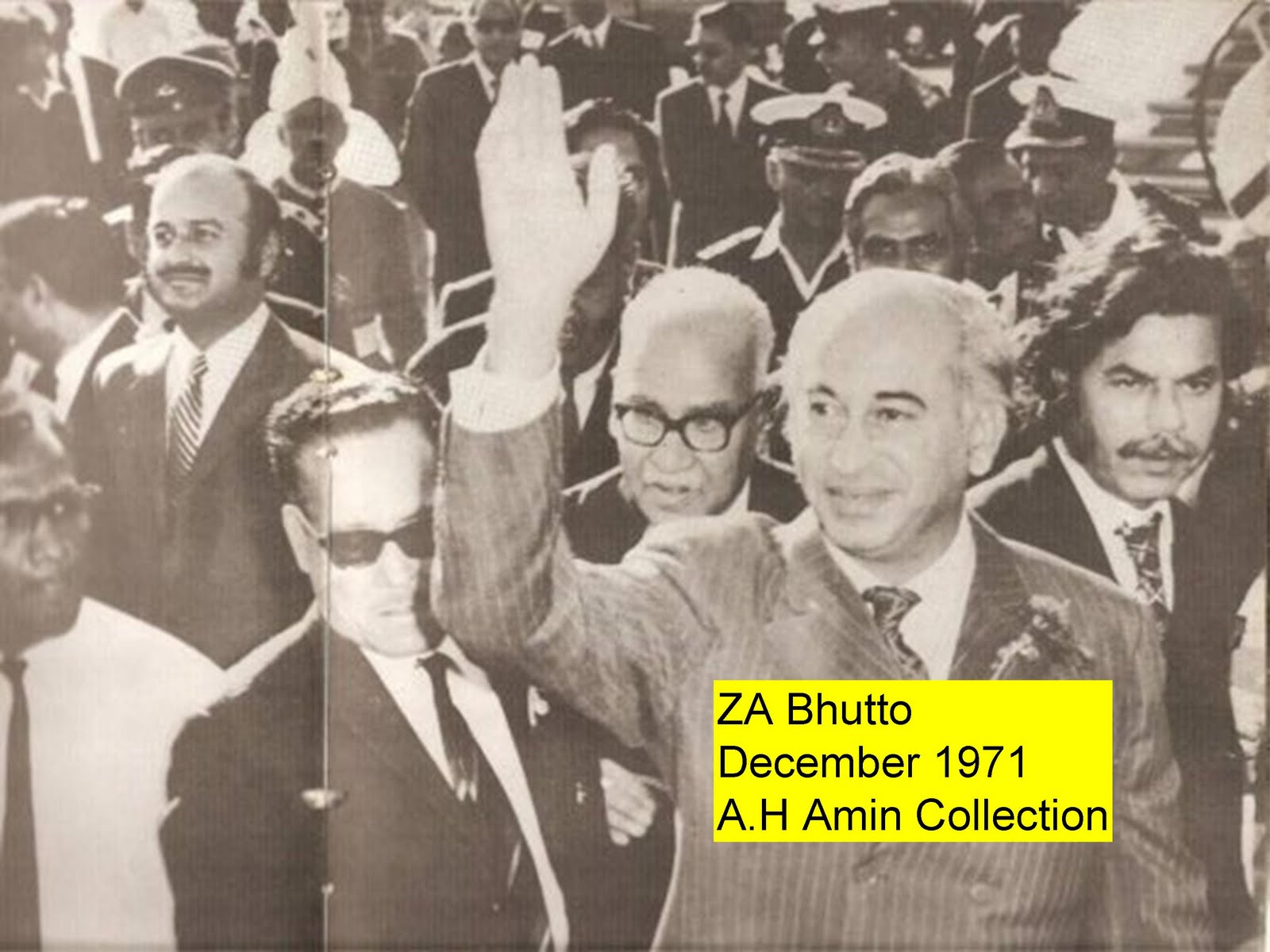
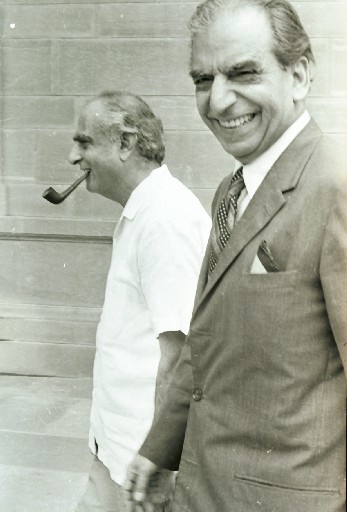
| ZA Bhutto meets Intellgence Boss Rao Rasheed .To the left another illustrious IG Police Fazl e Haq.I met Mr Fazl e Haq the first time in 1971 when he was serving as IG Balochistan.He was good friend of my father.I remember meeting his son Faizi in Quetta in 1971.He later served as IG in Sindh and Punjab too and also later wrote columns in newspapers. |
The bane of this country has been the repeated intervention of the army and thus frustrating political maturity and strengthening of political institutions. The four post-1988 interventions amply confirm this attitude/malaise of the Armed Forces.
It cannot be gainsaid that the military junta has failed in entirety in all interventions, and departed ignominously. The fate of the present element is yet to be seen but could be no different.
21. It has been said that Zia coup (he overthrew ruling Prime Minister Zulfikar Ali Bhutto in a bloodless coup d'état on 5. July 1977 and became the state's third ruler to impose martial law. He initially ruled as Chief Martial Law Administrator, but later installed himself as the President of Pakistan in September 1978.) was foreign inspired.
Yes, undoubtedly, the factors cited contributed to his selection as COAS. There was off course the American angle. They had picked Zia as suitable material at
22. How would Mr ZA Bhutto have behaved had he been in power when the Soviets invaded
Mr Bhutto laid the foundation of the Afghan resistance in 1973. He had the foresight and vision to do it. As a matter of fact we created the organisational network which was used by Zia and the

If it is the threat from the South (

The caveat was that Zahir Shah could return as a constitutional monarch under the Constitution drafted by Mr Musa Shafiq, a former Prime Minister and the mentor/founder of the Hizb in
23. Why was the PPP unable to mobilise the masses around the time Mr. Bhutto was sentenced to death till his execution?
It would be recalled that the PPP workers made great sacrifices and the resistance put up by Mr. Bhutto himself during his incarceration proved a beacon light. He endured all the excesses with great courage and dignity. The workers on their part went to jail in the thousands! Every element of society (pressmen, lawyers) were brutalised and lashed. A large number of workers resorted to self-immolation. However, it was the leadership that eventually deserted them. Jatoi and Khar colluded with the army, proceeded abroad and despite being mixed up with the Indian intelligence agency RAW[23], later Mr Khar was never tried by the military! Hafeez Pirzada also married afresh and abandoned his leader! The worst instance was of the talented cousin Mr Mumtaz Bhutto[24], who not only abandoned Mr. Bhutto but also colluded with Zia. Maulana Niazi[25], Mir Afzal Khan[26] and a host of others initially endeavoured to take over the party. In February 1978, when the endeavour failed or was foiled and Begum Bhutto[27] was designated co-chairperson, they disappeared from the scene. Their political nemesis is abundant proof of their disloyalty and the party (workers) never accepted them in their fold. The most poignant scene was at Garhi Khuda Bux, when on one of the anniversaries, they were beaten up by the workers and had to flee barefooted in the scorching heat! It is to the credit of the workers, that, despite 11 years of repression and intrigue (formation of IJI by the ISI), they yet succeeded in bringing the party into government in 1988. Contrast this with the events of October 1999 and subsequently, when the main leadership (Nawaz Sharif[28] and family) of the so-called PML[29] (Nawaz) absconded to
 |
| The biased trial of ZA Bhutto manipulated by zia and the sold characterless judges |
24. It is being said in Sindh and Balochistan that had Mr. Bhutto not been from Sindh he would not have been executed but exiled like Mr. Nawaz Sharif. What is your opinion?
There is no doubt in this assertion. Initially the attitude of the
 It was a replay of the Lahore High Court scenario. Moreover, no divided judgement has ever been affected but in this case Mr. Bhutto, hailing from a smaller province, was executed. The merit of the judgement is evident from the fact that it cannot be cited as a legal precedent. Foreign judicial/legal experts have termed it as judicial murder.
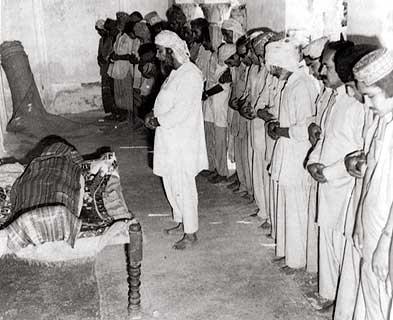 |
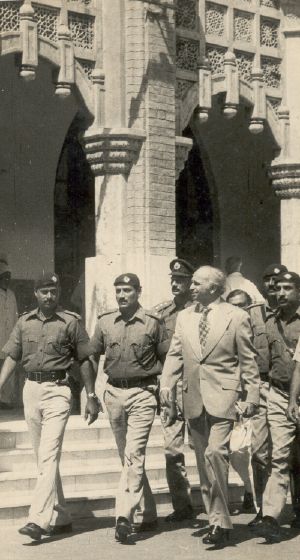
| Forced funeral of ZA Bhutto under military intelligence supervision of the usurper zia |
25. How would you assess Zia's Afghan policy?
It was based on sheer opportunism and personal interest. Initially, he lacked the vision and, therefore, suspended financing the movement. This resulted in break-up of movement from one to seven groups, each leader fending for himself. Secondly, when the Soviet invasion took place he did not form a government in exile, which could gain experience during the Jehad and be available when the
Related Video
-
THE LIFE OF CHARLES LUCKY LUCIANO - crime histor...
-
AL CAPONE AND THE CHICAGO MOB - (Documentary) Hist...
-
HENRY HILL THE TRUE STORY OF GOODFELLAS History Cr...
-
THE LIFE OF CHARLES LUCKY LUCIANO History Crim...
-
Gangland Assassins - History Channel Crime Docume...
-
THE LIFE OF AL CAPONE History Crime Biography docu...
-
National Geographic 2014 The Mafia Hitmen Hist...
![THE LIFE OF CHARLES LUCKY LUCIANO - crime history documentary [Documentary films]](http://i.ytimg.com/vi/LJzgX_2l7ds/3.jpg)


Related Photo


Post a Comment