
Colonel Nadir Ali-Dacca March 1971-Understanding the 1971 East Pakistan Fiasco
Posted by Author on
in
Blog
08
49
Colonel Nadir Ali-Dacca March 1971-Understanding the 1971 East Pakistan Fiasco

Colonel Nadir Ali -The Commando officer who was a direct participant in events of March 1971

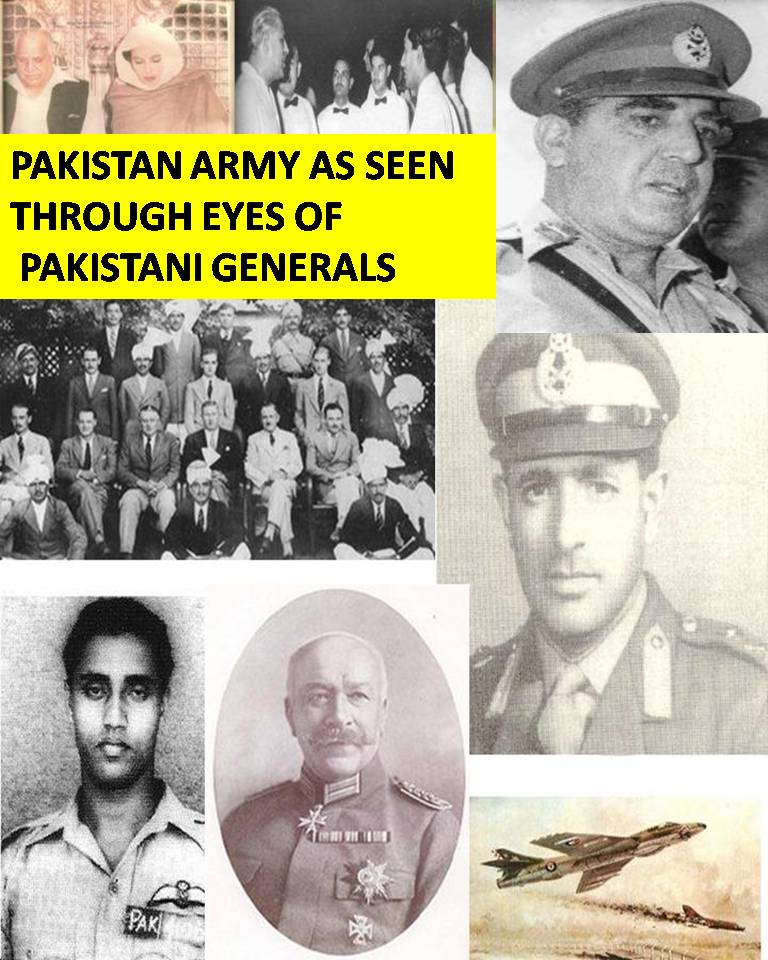


No less a person than Brigadier Tajammul Hussain Malik admitted that atrocities were committed in 1971.But then most occurred in Dacca (Major General Khadim Hussain Raja) , Chittagong and Khulna (south west).
16 Division under Major General Nazar Hussain Shah by and large had the best record and this explains why Nazar Hussain Shahs life was saved by a Bengali .
This scribes father was the GSO 2 Operations with Major General Nazar Hussain Shah (the GSO 1 an outstanding officer Lieutenant Colonel Ghulam Dastagir had been left behind at Quetta as he was a Bengali) and narrates that by a coincidence General nazar , the Bengali Session Judge and the DC were all old boys of Aligarh University and had an excellent understanding and rapport.
Major General Nazar Hussain Shah was a genuine down to earth soldier , bulky by build but genuine at heart and full of humanity ! This went a long way in civilising conduct of 16 Division ! Ironically typical of Tikka Khan Nazar Hussain Shah was retired while Rahim khan guilty of being ruthless in the crackdown was elevated to be secretary defence !
Brigadier Nisar of 25 Cavalry who was praised by Indian historians as outstanding in delaying battle in Shakargarh as commander of changez Force was also sidelined because he was not close to Tikka Khan and company and did not possess Zias mastery of art of sycophancy and appeasement of seniors !
It was typical of Pakistan Army that Brigadier Rahimuddin who did not join his brigade in Chamb on pretext of martial law duty was promoted to general rank while Nisar who fought both the 1965 and 1971 wars exceedingly well sidelined !
In 1965 Nisar by his singular action at Gadgor had literally saved Pakistan ! But promotion in Pakistan Army had nothing to do with war performance or real soldiering ! Pathetic !
Interestingly Brigadier Irshaad heading the military intelligence in 1965 and guilty of Pakistan Armys greatest intelligence failure of 1965 i.e disregarding a genuine report that Indian Armoured division was in kashmir , dismissing it as a deception plan , was promoted to two and three star after the war .He played hell with Pakistans 1 Corps in 1971 War !
Major General Sarfaraz whose conduct as GOC was outstanding in 1965 War was not promoted because his ability was regarded as a threat by Ayub Khan !
In words of Ayub Khans closest associate Altaf Gauhar Yahya Khan was promoted as army chief because he had hit the bittle hard and was regarded as politically harmless !

This scribes father was the GSO 2 Operations with Major General Nazar Hussain Shah (the GSO 1 an outstanding officer Lieutenant Colonel Ghulam Dastagir had been left behind at Quetta as he was a Bengali) and narrates that by a coincidence General nazar , the Bengali Session Judge and the DC were all old boys of Aligarh University and had an excellent understanding and rapport.
Major General Nazar Hussain Shah was a genuine down to earth soldier , bulky by build but genuine at heart and full of humanity ! This went a long way in civilising conduct of 16 Division ! Ironically typical of Tikka Khan Nazar Hussain Shah was retired while Rahim khan guilty of being ruthless in the crackdown was elevated to be secretary defence !
Brigadier Nisar of 25 Cavalry who was praised by Indian historians as outstanding in delaying battle in Shakargarh as commander of changez Force was also sidelined because he was not close to Tikka Khan and company and did not possess Zias mastery of art of sycophancy and appeasement of seniors !
It was typical of Pakistan Army that Brigadier Rahimuddin who did not join his brigade in Chamb on pretext of martial law duty was promoted to general rank while Nisar who fought both the 1965 and 1971 wars exceedingly well sidelined !
In 1965 Nisar by his singular action at Gadgor had literally saved Pakistan ! But promotion in Pakistan Army had nothing to do with war performance or real soldiering ! Pathetic !
Interestingly Brigadier Irshaad heading the military intelligence in 1965 and guilty of Pakistan Armys greatest intelligence failure of 1965 i.e disregarding a genuine report that Indian Armoured division was in kashmir , dismissing it as a deception plan , was promoted to two and three star after the war .He played hell with Pakistans 1 Corps in 1971 War !
Major General Sarfaraz whose conduct as GOC was outstanding in 1965 War was not promoted because his ability was regarded as a threat by Ayub Khan !
In words of Ayub Khans closest associate Altaf Gauhar Yahya Khan was promoted as army chief because he had hit the bittle hard and was regarded as politically harmless !

Brigadier Tajammul Hussain Malik was praised as an outstanding commander by a person no less than the Indian opponent of his Major General lachman Singh .
A special commission was appointed by Indian Army to study Tajammuls brigade actions !
The tragedy is that Tikka Khan and Bhutto sidelined the best officers of 1971 ! Nazar Hussain shah was sidelined because he was not a Rajput (!) and Tajammul was sidelined because he was not a pathetic sycophant with no war record like Zia ul Haq !
Mr Z.A Bhutto by selecting a man with a pathetic personality and no war record as army chief paid the price with his head !
The tragedy is that Pakistan Army has not learnt its lesson and the illegitimate usurper musharraf has created a new potential East Pakistan in Balochistan and FATA !
Tragedy par excellence !
Agha H Amin , Major (Retired)
---------------------------------------------------
---------------------------------------------------
Recollections of a Pakistan Army Officers about East Pakistan Civil War of 1971
Colonel Nadir Ali (Retired)http://www.viewpointonline.net/a-khaki-dissident-on-1971.html
During the fateful months preceding the dismemberment of Pakistan, I served as a young Captain, meantime promoted to the rank of the Major, in Dhaka as well as Chittagong. In my position as second-in-command and later as commander, I served with 3 Commando Battalion.
My first action was in mid April 1971. "It is Mujib-ur-Rahman's home district. It is a hard area. Kill as many bastards as you can and make sure there is no Hindu left alive," I was ordered.
"Sir, I do not kill unarmed civilians who do not fire at me," I replied.
"Kill the Hindus. It is an order for everyone. Don't show me your commando finesse!".
I flew in for my first action. I was dropped behind Farid Pur. I made a fire base and we fired all around. Luckily there was nobody to shoot at. Then suddenly I saw some civilians running towards us. They appeared unarmed. I ordered "Stop firing!" and shouted at villagers, questioning them what did they want. "Sir we have brought you some water to drink!", was the brisk reply.
I ordered my subordinates to put the weapons away and ordered a tea-break. We remained there for hours. Somebody brought and hoisted a Pakistani flag. "Yesterday I saw all Awami League flags over your village" I told the villagers. That was indeed the fact. I didn't know whether to laugh or cry. Later the main army column caught up to make contact. They arrived firing with machine guns all around and I saw smoke columns rising in villages behind them. "What's the score?" the Colonel asked.
"There was no resistance so we didn't kill anyone," he was informed.
He fired from his machine gun and some of the villagers who had brought us water, fell dead. "That is the way my boy," the Colonel told this poor Major.
I was posted there from early April to early October. We were at the heart of events. A team from my unit had picked up Sheikh Mujib Ur Rehman from his residence on 25th March, 1971. We were directly under the command of Eastern Command. As SSG battalion commander, I received direct orders from General Niazi, General Rahim and later Gen Qazi Majid of 14 Div Dhaka.
Ironically, the resistance was led by General Zia Ur Rehman (later to become Bangladesh's military ruler) was a fellow instructor at Pakistan Military Academy. Similarly, General Khalid Musharaf, who overthrew Zia in a counter-coup, was my course mate as well as a room-mate at the Pakistan Military Academy (PMA). He was also a fellow officer in SSG. Brig Abu Tahir, who brought General Zia back to power in a counter-counter coup, was also a friend and fellow officer in SSG. He was a leftist, jailed and later hanged by Gen Zia Ur Rehman whom he brought back to power in the fateful months in Bangladesh's history, after the murder of founding father, Sheikh Mujib Ur Rehman.
Another leftist friend was Major Zia Ud Din. He was a freedom fighter and as Naxalite remained under ground from 1971 to1989 when a general amnesty was declared.
I came back to West Pakistan for getting my promotion to Lt. Colonel, in my parent corp, Ordnance, in October 1971.From December 1971 onwards, I began to suffer memory loss till my retirement on medical grounds in 1973. I remained in the nut house for six months in 1973. As a Punjabi writer, I regained my memory and rebuilt my life. I remember every moment from the year 1971.
For operations and visits to my sub units, I travelled all over East Pakistan. I never killed anybody nor ever ordered any killing. I was fortunately not even witness to any massacre. But I knew what was going on in every sector. Thousands were killed and millions rendered homeless. Over nine million went as refugees to India. An order was given to kill the Hindus. I received the same order many times and was reminded of it . The West Pakistani soldiery considered that Kosher. The Hamood Ur Rehman Commission Report mentions this order. Of the ninety-three lakh (9.3 million) refugees in India, ninety lakh were Hindus .That gave us, world-wide, a bad press and morally destroyed us. Military defeat was easy due to feckless military leader ship. Only couple of battalions in the north offered some resistance. For example, the unit of Major Akram, who was awarded highest military medal, Nishan-e-Haider, resisted and he lost his life.
East Pakistan, part of the country a thousand miles away, was "a geographical and political absurdity" as John Gunther said in "Inside Asia Today".
With federal capital in Islamabad, dominated by West Pakistani civil servants and what they called a Punjabi Army, East Pakistanis felt like subjects of a colony. They never liked it ever since 1947. In early sixties, my fellow Bengali officers called each other general, a rank they would have in an independent East Pakistan. We all took it in good humour. But 1971 was not a joke. Every single Bengali felt oppressed. Their life and death was now in the hands of what they called "Shala Punjabies".
I granted a long interview, recounting what I saw and felt in 1971, to BBC Urdu Service in December 2007. The Bangladesh Liberation Museum asked for a copy of the interview. It was too lengthy for me to transcribe, translate and type. Here, I attempt to re-collect bits and pieces yet again.
What drove me mad? Well I felt the collective guilt of the Army action which at worst should have stopped by late April 1971. Moreover, when I returned to West Pakistan, here nobody was pushed about what had happened or was happening in East Pakistan. Thousands of innocent fellow citizens had been killed, women were raped and millions were ejected from their homes in East Pakistan but West Pakistan was calm. It went on and on .The world outside did not know very much either. This owes to the fact that reporters were not there. General Tikka was branded as "Butcher Of Bengal". He hardly commanded for two weeks. Even during those two weeks, the real command was in the hands of General Mitha, his second-in-command. General Mitha literally knew every inch of Bengal. He personally took charge of every operation till General Niazi reached at the helm. At this juncture, General Mitha returned to GHQ. General Tikka, as governor, was a good administrator and made sure that all services ran. Trains, ferries, postal services, telephone lines were functioning and offices were open. There was no shortage of food, anywhere by May 1971. All in all, a better administrative situation than Pakistan of today ! But like Pakistan of today, nobody gave a damn about what happens to the poor and the minorities. My worry today is whether my granddaughter goes to Wisconsin University or Harvard. That nobody gets any education in my very large village or in the Urdu-medium schools of Lahore, where I have lived as for forty years so called concerned citizen, does not worry me or anyone else.
In Dhaka, where I served most of the time, there was a ghostly feeling until about mid April 1971. But gradually life returned to normal in the little circuit I moved: Cantonment, Dacca Club, Hotel Intercontinental, the Chinese restaurant near New Market. Like most human beings, I was not looking beyond my nose. I moved around a lot in the city. My brother-in-law, Riaz Ahmed Sipra was serving as SSP Dhaka. We met almost daily. But the site of rendezvous were officers' mess, some club or a friend's house in Dhan Mandi. Even if I could move everywhere, I did not peep into the hearts of the Bengalis. They were silent but felt oppressed and aware of the fact that the men in uniforms were masters of their lives and properties. I frequently met Mr Fazlul Qadir Chaudhry, Maulana Farid Ahmed and many other Muslim League and Jamaat leaders in one government office or the other. Prof. Ghulam Azam and Ch Rehmat Elahi also used to meet me to provide me volunteers to carry out sabotage across the Indian Border.
Dr Yasmin Sakia, an Indian scholar teaching in America, told me once an anecdote. When she asked why in the 1990s she could not find any cooperation in tracing rape-victims of 1971, she was told by a victim," Those who offered us to the Army are rulers now."
One can tell and twist the tale. The untold part also matters in history. Two Bengali soldiers whom I released from custody, were issued weapons and put back in uniform. They became POWs along 90 thousand Pakistani soldiers and spent three years in Indian jails. I discovered one of them serving as a cook in 1976 in Lahore. I had regained my memory. "Kamal –ud-Din you?" I exclaimed on sighting him. "Sir you got me into this!"
The Pakistani Army had thrown them out. The other guy teaches in Dhaka now.
The untold part of the story is that one day I enquired about one soldier from Cammandos unit. He used to be my favourite in 1962. "Sir, Aziz-ul –Haq was killed", the Subedar told me rather sheepishly.
"How?" was not a relevant question in those days. Still I did ask.
"Sir! first they were put in a cell, later shot in the cell".
My worst nightmare even forty years later is the sight of fellow soldiers being shot in a cell. "How many ?" was my next question. "There were six sir, but two survived. They pretended to be dead but were alive," came the reply.
"Where are they ?"
"In Cammilla sir, under custody".
I flew from Dacca to Commilla. I saw two barely recognizable wraiths. Only if you know what that means to a fellow soldier! It is worse than suffering or causing a thousand deaths. I got them out, ordered their uniforms and weapons. "Go, take your salary and weapons and come back after ten days." They came back and fought alongside, were prisoners and then were with difficulty, repatriated in 1976. Such stories differ, depending on who reports.
All these incidents, often gone unreported, are not meant to boast about my innocence. I was guilty of having volunteered to go to East Pakistan. My brother-in-law Justice Sajjad Sipra was the only one who criticized my choice of posting. "You surely have no shame," he said to my disconcert. My army friends celebrated my march from Kakul to Lahore. We drank and sang! None of us were in two minds. We were single-mindedly murderous! In the Air Force Mess at Dacca, over Scotch, a friend who later rose to a high rank said, " I saw a gathering of Mukti Bahini in thousands. I made a few runs and let them have it. A few hundred bastards must have been killed" My heart sank. "Dear! it is the weekly Haath (Market) day and villagers gather there," I informed him in horror. " Surely they were all Bingo Bastards!," he added. There were friends who boasted about their score. I had gone on a visit to Commilla. I met my old friend, then Lt. Col. Mirza Aslam Beg and my teacher, Gen. Shaukat Raza. Both expressed their distaste for what was happening. Tony, a journalist working with state-owned news agency APP, escaped to London. He wrote about these atrocities that officers had committed and boasted about. It was all published by the 'Times of London'. The reading made me feel guilty as if I had been caught doing it myself! In the Army, you wear no separate uniform. We all share the guilt. We may not have killed. But we connived and were part of the same force. History does not forgive!
The writer is a retired Army Officer , Punjabi poet and short story writer. UNDERSTANDING THE 1971 CRISIS COMMENTS ONM BOOK REVIEW OF AHMAD FARUQUI ON GENERAL NIAZIS BOOK PUBLISHED DEFENCE JOURNAL KARACHI JUNE 2000 BY MAJOR AGHA H AMIN (RETIRED) Book Review-General Niazi’s Book The book review on General Niazi’s book was a very fine effort. There are some observations which I wish to share with the readers. Firstly the writers quoting another author saying that creation of Bangladesh was the end of the two nation theory. We in Pakistan have twisted “Two Nation Theory†very subjectively . We have forgotten that Mr Jinnah the founder of Pakistan favoured creation of an Independent Bengal in 1946. H.V Hodson perfectly reliable authority states that Mr Jinnah said that he would be delighted if Bengal stayed united and independent and added, “What is the use of Bengal without Calcutta? They had much better remained united and independent: I am sure they would be on friendly terms with Pakistanâ€Â. (Refers-Page-246- The Great Divide- H.V Hodson- Oxford University Karachi-1985). Bengal did not become independent because of Bengali Hindu fears about being in a Muslim majority independent Bengal. Thus the connection with “Two Nation Theory†was not the reason why Bengal was divided in 1947. Mr Jinnah saw in 1946 i.e the inadvisability of having Bengal in Pakistan without Calcutta. Something that the Pakistani policy makers failed to grasp till 1971! It is to Jinnah’s credit that he brought Bengalis in the army by raising the first two battalions of the East Bengal regiment. A process, which was stopped by Ayub from 1950 to 1966, as a result of which Pakistan Army instead of becoming a broad based national army like the post 1947 Indian Army, remained, a Punjabi dominated army. A factor which contributed a great deal to the separation of East Pakistan. The Two Nation Theory was created due to certain reasons which at that time were valid albeit relatively. It did not exist in 711 AD or in 1857 but was enunciated in the period 1860-1940. In 1971 it was no longer valid at least for the Bengali Muslims and they rejected it. My second contention pertains to the author’s quoting a Pakistani General stating that “Never before had a Muslim army surrendered before a Hindu army or the assertion that the Pakistan Army was a bearer of traditions of the early Muslim conquerors of India! This assertion is absolutely false ! The problem is that we have to get out of this “Martial Races Syndromeâ€Â. The vast bulk of Pakistan army consists of men with Hindu or Buddhist ancestry! As a matter of fact the Hindu Rajputs of the north of Chenab area from where the vast bulk of Pakistan army is recruited were far more difficult to govern before they were converted to Islam! The only positive connection that these races had with the Muslim Turks was the fact that one of their members killed Sultan Ghauri! Even the Pathans, the second largest group of Pakistani soldiers, had little connection with Turkish invasions of India! Babar did not like the Pathans and the Pathans generally remained in conflict with the Muslim governments in Delhi! Many Muslim forts surrendered to the Hindu Marathas during the Maratha war in the south. The Marathas captured Delhi long before 1971 in mid -18th century and held it with uneven gaps till 1803 once the British captured it. As a matter of fact the problem is that most of our worthy generals have not read military history of the sub-continent. The Pakistan Army is not the descendant of the Turk armies that invaded India! Of course with the exceptions of some genuinely Mughal villages like Lehr Sultanpur etc! The Pakistan Army is a chip from the block of the old mercenary British army with its origins in the “Mutiny Loyalty of Punjabi Muslim Pathan and Sikh soldiers†who attacked Delhi for the first time in September 1857 and in phenomenal staunchness of Punjabi soldiers while facing the Muslim Turks in WW One! The Punjabis once totalled as Muslim Hindu and Sikh, as an ethnic group became the largest single group and the vast bulk of the British Indian Army in the period 1883-1911. In 1883 there were about 34.09 % or 120 Punjabi companies (25 Punjabi Muslims, 18 Punjabi Dogra Hindus and 77 Punjabi Sikhs) and 15 Pathan companies out of the total 352 infantry companies of the Regular Bengal Army. By 1911 the Indian Army was a more than 50 % Punjabi army although never a Muslim majority army. In 1929 thanks to Pathan and Ranghar defiance of the British in WW One the Punjabi percentage (divided into roughly one third Muslim Sikh and Hindu) of the Indian Army rose to 54.36% if the Gurkhas were included and to 61.8 % if Gurkhas were excluded. The Pathan share at this time stood at 4.02 % out of which all were not ethnic or linguistic Pathans. (Refers- Map on page-96 - Report of Indian Statutory Commission-Volume One- Calcutta - Government of India - Publication Branch - 1930). The low caste Hindu Marathas militarily defeated the Mughals long before 1971 and their hold on India was finally successfully challenged not by any Punjabi or Pathan Muslim army but by the Bengal and Madras armies of the English East India Companies at Laswari and Assaye respectively in 1803! Punjab later dubbed as a martial province with a Muslim majority was firmly under Sikh domination despite the fact that the Sikhs were a 8 or 9 % minority! During Sikh rule mosques were often used as military magazines, including the famous Badshahi mosque and some times plastered with cow dung (Pages -347 to 360 “Lahore -Past and Present†- M.Baqir, Punjabi Adabi Academy, Lahoreâ€â€1984)as happened with the Golden Mosque of Kashmiri Bazaar Lahore ! So much for the martial traditions, just 122 years ago, of the largely Punjabi Muslim army that surrendered in East Pakistan! The problem ironically was the fact that the same West Pakistanis, who despised Bengalis as non-Martial race in March 1971, at least were not as martial in 1849, as they became in 1914, because of British recruitment policies and situational reasons! The problem is that we have forgotten that all territory west of Aligarh district (including Aligarh), including Delhi Agra Punjab and Frontier was under Hindu Maratha or non-Muslim Sikh rule till 1803 or as late as 1849! There were no martial races in Muslim majority Punjab, at least to rule Punjab till 1849! So much for the martial traditions of Muslims of Indo-Pak! It was all situational, there being no martial races! But somehow in Pakistan by 1950s myth became mixed with reality and myth finally gained the upper hand ! The winter of our discontent finally came in the killing fields of Bengal in December 1971!   General Niazi, the much maligned man, was the tip of the iceberg only! But we realise this only if he is assessed in the light of the other factors. He was a product of the Ayubian system when officers with ranker background or those who lacked independent judgements were preferred for higher ranks! The class conscious British who were extremely snobbish in selection of regular officers for the British Army very cleverly kept a 50% quota for Indian Army rankers (24 on internal merit and 6 on nomination) in each intake ( 30 out of 60 cadets) of the Indian Military Academy Dera Dun. The ulterior motive was to ensure that relatively more pliable , politically inert, and orders oriented material entered the Indian officer corps. In India the ranker breed did not do as well as Pakistan because their first Indian C-in-C Cariappa was from the 1919 commissioned Indian course. On theother hand in Pakistan the civilian leadership in its zeal to have a non-Punjabi C-in-C at a time when the Punjabi-Hindustani conflict was at its peak selected Ayub who was a 1927 commissioned officer. This led to the exit of many Sandhurst/Daly College commissioned Muslim officers who were senior to Ayub. The leftover of Sandhurst commissioned officers were eliminated by Ayub through forced retirement or by promotion of Musa to C-in-C’s appointment in 1958.  Thus the Pakistan Army lost the services of many more experienced officers simply because they were sidelined through political supersession or were retired. The gap between the two Indo Pak armies in quality of experience may be gauged from the fact that the first Indian C-in-C was eight years senior to Ayub in service and the course mate of Musa, the second Muslim C-in-C of the Pakistan Army i.e Manekshaw became the Indian C-in-C eleven years after Musa!  This may have worked positively for the Pakistan Army had Musa been a man with an independent outlook! Musa on the other hand as Gul Hassan’s memoirs revealed lacked independent judgement dynamism or talent! The Pakistan army during the period 1951-71 became a highly orders oriented machine! Smart on the drill square, tactically sound but strategically barren and lacking in operational vision! One whose first Pakistani C-in-C was more interested in political intrigue and industrial ventures than in the basics of higher military organisation or operational strategy! Modern warfare on the other hand demanded mission-oriented approach, which was sadly lacking in both the Indo Pak armies! This was thanks to the British inherited orders oriented approach which in words of General Mellenthin of the Wehrmacht, reduced British officers to the status of clerks and mouthpieces of their commanders! The British with all the resources of the British Empire and thanks to US aid in both world wars managed to survive despite phenomenal military incompetence. Thus Alanbrooke the British Chief lamented during WW Two once he said “It is lamentable, how poor we are in army and corps commanders; we ought to remove several , but heaven knows where we shall find anything much better...the flower of our manhood was wiped out some twenty years ago and it is just some of those that we lost then that we require now†(Refers-Page-239- The Turn of the Tide-Arthur Bryant -Collins Saint James Place-London-April 1957). But this incompetence was no longer affordable in the resource starved Pakistan Army of 1971! The Indian problem was less serious since many of their drawbacks were overcome by the fact that they were numerically superior, and possessed larger material resources. This was applicable relatively less in 1965 and convincingly more in 1971! Secondly the Indians had lesser number of ranker officers in their higher ranks and had benefited from the experience of a larger number of service chiefs with more experience in terms of length of service as well as war record than Pakistan Army, whose first chief was famous for tactical timidity in Burma, while the second chief was a non entity, whose only quality was humility, albeit, commensurate with his actual potential (!) and political reliability!   Some readers may find the approach biased. Nevertheless it is based on lessons of military history. Leadership is a situational process. The finest leadership seen in an institutionalised form was developed in the German Army. The German officer corps was dominated by two classes of men. One, scions from aristocratic families of Prussia or the impoverished nobility weak in land holding but bearers of a long tradition in officer rank. Men with the title/prefix Von. Second were men of learning who made their way upwards in the officer corps through sheer merit and on total intellectual grounds. Like Moltke Gneisenau and Scharnhorst (of humble origins but educated under a noble’s patronage who saw great talent in him). Take Moltke the Elder, the writer of a large number of military history works and a profound thinker. He cannot be compared with Niazi Tikka or Musa, all of whom entered the army on the ranker quota and the last were not famous for any qualities of higher military leadership apart from eminence in conducting ruthless counter insurgency operations in Baluchistan or East Pakistan! Men who had not written even a single article or composition on any military subject, with any trace of depth of intellect!  When I was commissioned in the army in March 1983 we had two officers in 11 Cavalry who specialised in narrating anecdotes of General Tikka Khan’s utterances of Solomon’s wisdom on various occasions while he was the chief! Take Ayub Khan. Guilty of tactical timidity in Burma! No comparison with Thimaya the only Indian to command an infantry brigade in actual action in WW Two or Rajendarsinhji the first Indian to get a DSO! Those who did have the talent of higher command or grasp of strategy like Yaqub were sidelined! Those who did have a record of accomplished generalship as divisional commanders like Abrar or Sarfaraz or brigade commanders like Qayyum Sher were not promoted! The reviewer’s observation about gallantry awards may be compared with Tajammul’s observation about the round about manner in which gallantry awards were awarded in 1965, e.g Aziz Bhatti’s case who as per Tajammul died on the home bank of BRB (by fluke) but was awarded a Nishan e Haidar on the basis of the citation (which was rewritten three times) written by his Commanding Officer Colonel Ibrahim Qureshi (a man the readers may or may not know of considerable literary merit). (Refers-Page-74-The Story of My Struggle- Major General Tajammul Hussain Malik-Jang Publishers- Lahore -1991) . In any case Hilal I Jurrat was awarded even to Niazi again and to General Rahim (accused of fleeing in a unsoldierly manner later), Ansari, Sharif (God knows why) during the period when the army was engaged in minor operations against the so-called Mukti Bahini insurgents from March to December 1971 (Page -126-Ibid). Tajammul a Punjabi Muslim from Chakwal forthrightly admitted that these above-mentioned awards were given to these gentlemen for killing their own countrymen! (Ibid).  The problem of the Pakistan Army was not lack of talent but of operating in an environment, which I have always referred to in a self-coined phrase as “ conspiracy against originality and boldnessâ€Â, something which I at least witnessed in my 13 years service from 1981 to 1994. Why this conspiracy against talent? We enter the political realm once again! The German Kaisers had nothing to fear from a Moltke or Blucher but military or civilian usurpers of Pakistan had a lot to fear from a more talented general! Thus the necessity for (another self-coined phrase) “Goof Selection Syndromeâ€Â, a process initiated by Liaquat the first prime minister under able advice of Iskandar Mirza and perfected by Ayub and Bhutto. “Select a man from an ethnic or sectarian minority or at least a politically docile man or one who is mediocre or at least perceived/assessed as suchâ€Â. Thus in the Ayubian era officers with ranker background, were not preferred on merit, but on the basis of lack of talent and thus lack of ambition in being politically docile, or being from ethnic and sectarian minorities as was the case with Musa and Yahya. The German Army which we were discussing as late as 1930’s the German army was a “Von†dominated army. As a matter of fact most of the German generals who opposed Hitler’s rule and many of his unsound strategic decisions were men like Fritsch Manstein etc, all of them with an aristocratic background. In India unfortunately the British with an ulterior motive had encouraged men from the ranks to be officers with the thinking that these would be more reliable. There never was any 50 % quota for rankers in Sandhurst! Why the British were so generous with the despised Indians! Even the Punjabi dominated army which was so much criticised by the British press for atrocities in East Pakistan was a British creation whose origins dated back to the period 1883-1911! The army did have potential Moltke’s Mansteins and some Grey Wolf’s but the vast bulk of these, perhaps with the exception of men like Eftikhar Khan were sidelined! Even Eftikhar, thanks to his unorthodox personal life, was a sidelined man, once the war broke out, and it was Pakistan Army’s good luck that this great leader of men, our finest commander commanded the 23 Division! I remember a session with General Attiq ur Rahman whenI presented him with a book that I had written on Clausewitz’s military thoughts . 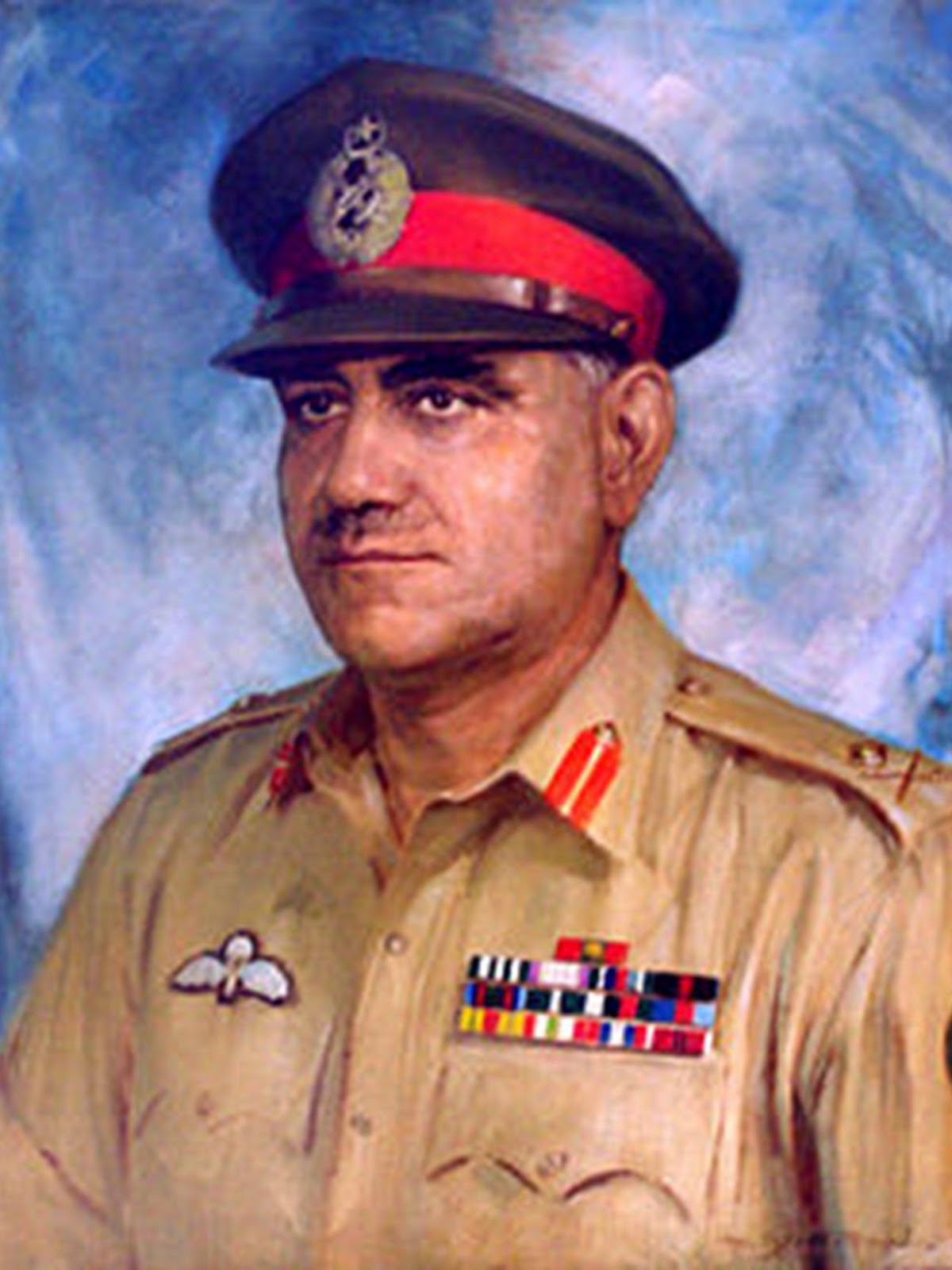 The book was dedicated to Eftikhar Khan. Attiq was horror struck and remembered Eftikhar as a horrible man , as Attiq saw him in the light of Attiq’s strict standards of morality as Eftikhar’s Directing Staff in Staff College Quetta. I dismissed General Attique’s objections since I viewed Eftikhar as all the officers and men of my unit 11 Cavalry saw him in Chamb in 1971. Moving towards the sound of guns, racing ahead of the leading tank ! Goading cursing and prodding with his stick irresolute lower commanders ahead ! Our problem has been failure to identify and groom talent! A natural result in a country where the Prime Minister or the President wants to have the most pathetic man in the highest ranks, just because he feels safer with them! There were some charismatic and resolute men in East Pakistan at brigade level like Tajammul or Saadullah but Tajammul was described as a nut to this scribe by his brigade major! Nut because he wished to fight till the bitter end and was abandoned by most officers of his headquarter while doing so ! But these men Tajammul, Saadullah etc were the exception rather than the rule! An officer who served in 16 Division Headquarters and stayed as a prisoner stated in a conversation in 1983 that the choice in December 1971 was between getting massacred by the Bengalis or safety of an Indian camp and many, specially those involved in atrocities against non combatants/civilians were positively relieved on hearing the announcement of surrender. On the other hand surrender was a traumatic experience for many upright officers like some who I saw even as late as 1985 as brigadiers were bitter about the terrible psychological experience of the whole affair. There were fighting soldiers who had no part in any atrocities against non-combatants! Many fine souls like Ijaz Mustafa, Sultan Mahmood and many more died in the fighting, but today they are not remembered since they had no one to write a good citation or no patron in the higher headquarters to send their names ahead. The Eastern Command on the other hand required a mission-oriented commander with independent judgement! Niazi’s intellectual level as stated by Gul and many others was not beyond that of a company commander! The GOCs that he had were equally illustrious! On the other hand the strategic situation in 1971 required a Moltke or Manstein in the Pakistani GHQ! Thus the basic reasons for surrender do not lie in Niazi’s personality alone, but in other factors! The surrender in 1971 was the combined result of absence of a Von Lettow Vorbeck (German commander in East Africa in WW One) in East Pakistan and an absence of a Moltke the Elder or Manstein in the Pakistani GHQ! The surrender had two angles, one strategic, which was in the realm of the Pakistani GHQ and the other operational i.e the realm of the Eastern Command. I will quote an Indian to prove that East Pakistan could have been saved despite all the horrible things done by another ranker Tikka, had the Pakistani GHQ acted with a greater sense of timing! General Candeth who was C in C Western Command states in his book that “ the most critical period was between 8 and 26 October when 1 Corps and 1 Armoured Division were still outside Western Command. Had Pakistan put in a pre-emptive attack during that period the consequences would have been too dreadful to contemplate and all our efforts would have been trying to correct the adverse situation forced on us “ (Refers-Page-28-The Western Front-Indo Pakistan War 1971- Lt Gen P. Candeth -Allied Publishers-Madras-1984). The fact that Niazi became a three star general proves that incompetent men can reach relatively high ranks in an army. Who can say that Niazi was different from the bulk of other generals of the Pakistan Army in 1971! An army in which between 1955 and November 1971, in about 17 years 40 Generals had been retired, of whom only four had reached their superannuating age. (Refers- Page-258 & 259- Pakistan’s Crisis in Leadership-Major General Fazal Muqeem Khan (Retired)-National Book Foundation-Ferozsons-Rawalpindi-1973). An army in which in the words of a major general who served in the same period, anyone “in the higher ranks who showed some independence of outlook were invariably removed from service†or one in which “Some officers were placed in positions that they did not deserve or had no training forâ€Â! (Ibid). An army where “gradually the officer corps, intensely proud of its professionalism was eroded at its apex into third class politicians and administratorsâ€Â! (Refers-Ibid). An army in which security of commission and constitutional safeguards against arbitrary dismissal thanks to laws amended from early 1950s ,thanks to Liaquat Ali Khans arbitrary changes in the military act , with advisors like Sikandar Mirza and Ayub Khan who had nothing to do with soldiering in real war , were so lacking that “some left in sheer disgust in this atmosphere of insecurity and lack of the right of criticism, the two most important privileges of an armed force officerâ€Â. (Refers-Ibid). As a matter of fact Clausewitz recognised mediocrity in higher ranks. As per Gul obsequiousness helped Niazi in his rise. Then being from Ayub’s unit also played a part in his promotion to higher ranks. As far as gallantry is concerned Niazi did win an MC in WW Two and an HJ in 1965! But then, the resolution required at higher level, as Clausewitz the great philosopher of war says, is far different from that required at a lower level, thus “higher the rank the more necessary it is that boldness be accompanied by a reflective mindâ€Â, compare this with General Niazi. “Much more strength of will is required to make an important decision in strategy than in tacticsâ€Â; judge Yahya in the light of this statement and the situation is easier to comprehend! Yahya’s war record, successful escape from a Prisoner camp, or combat action as a company officer or company commander or command of a division, was no guarantee that Yahya possessed the strategic vision or talent to function successfully as Pakistan’s Supreme War Lord in a conflict with an enemy with a marked numerical superiority! He simply did not have the “strength of will or the strategic insight to execute a sound military strategy “ in a situation which required a man with a Moltke the Elder’s calibre! It was not a question of valour or more being more martial but a conflict of David and an over cautious Goliath (as Candeth’s statement proves) in which the David lost or lost too badly; not because of weak muscles or fists but because of lack of resolution and strategic talent at the operational as well as strategic level! Lastly the military conduct of war in East Pakistan. The failure to withdraw to the Dacca bowl, the failure to foresee the pattern of Indian operations in case of war!
Niazi alone cannot be blamed for it! In foreseeing this the GHQ, Niazi’s staff, all five of his GOCs and above all Yahya’s strategic failure in exercising the offensive strategy to remedy the operational crisis resulting from an Indian attack on East Pakistan were the ultimate reason for surrender. Related Video
Post a Comment |


![How Critical is US Relationship with Pakistan? [FOX: 5-10-2011]](http://i.ytimg.com/vi/19aRBlu7bB8/3.jpg)