BATTLES FOR LUCKNOW-1857-58
Posted by Author on
in
Blog
08
49
   The Chapter Eight The Siege of We have earlier discussed in brief the situation at  Thereafter, Sir Henry Lawrence started making serious preparations against a likely siege by the rebel Sepoys. The Garrison was located in an old fort Machhi Bhawan, however,
 He also dumped a large quantity of ammunition and rations in the residency area. Things, however, remained calm till news of outbreak at On the night of 30th May almost all native troops in  On 29th  On 1st of July feeling that he could not hold both Machhi Bhawan and the Residency keeping in view his limited strength,
Orientation with the City of  The city was full of Palaces and Gardens built on the western style by various rulers of
To the south and east of the city was the Ghazi-ud-Din Haider canal built during the reign of Ghazi-ud-Din Haider(1814-27) with the purpose of bringing water from Ganges river in the South to river Gumti which it hardly ever probably did386. East of the canal was the 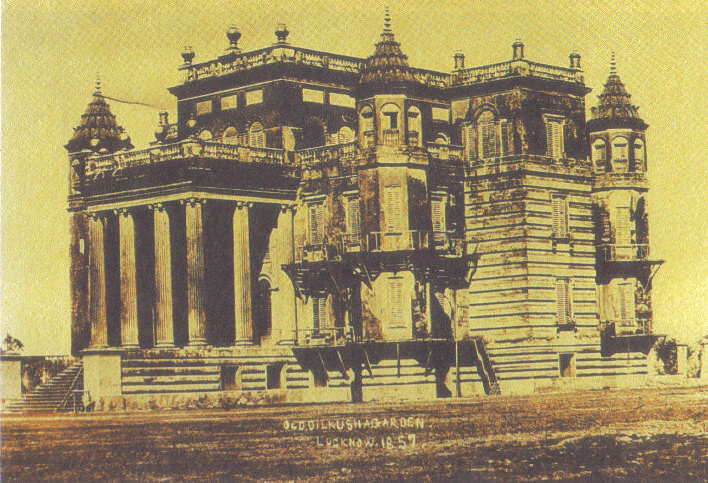 The Palace was surrounded by very thick vegetation and was located on an elevated piece of ground. In 1830 an Englishman made a balloon ascent here in presence of King Nasir-ud-Din Haider and large number of his courtiers 388. Â Other famous buildings of the city were the Bara Imambara built around 1784389, the Shah Najaf Masoulem, Sikandar Bagh,  The Gumti was spanned by two bridges i.e. 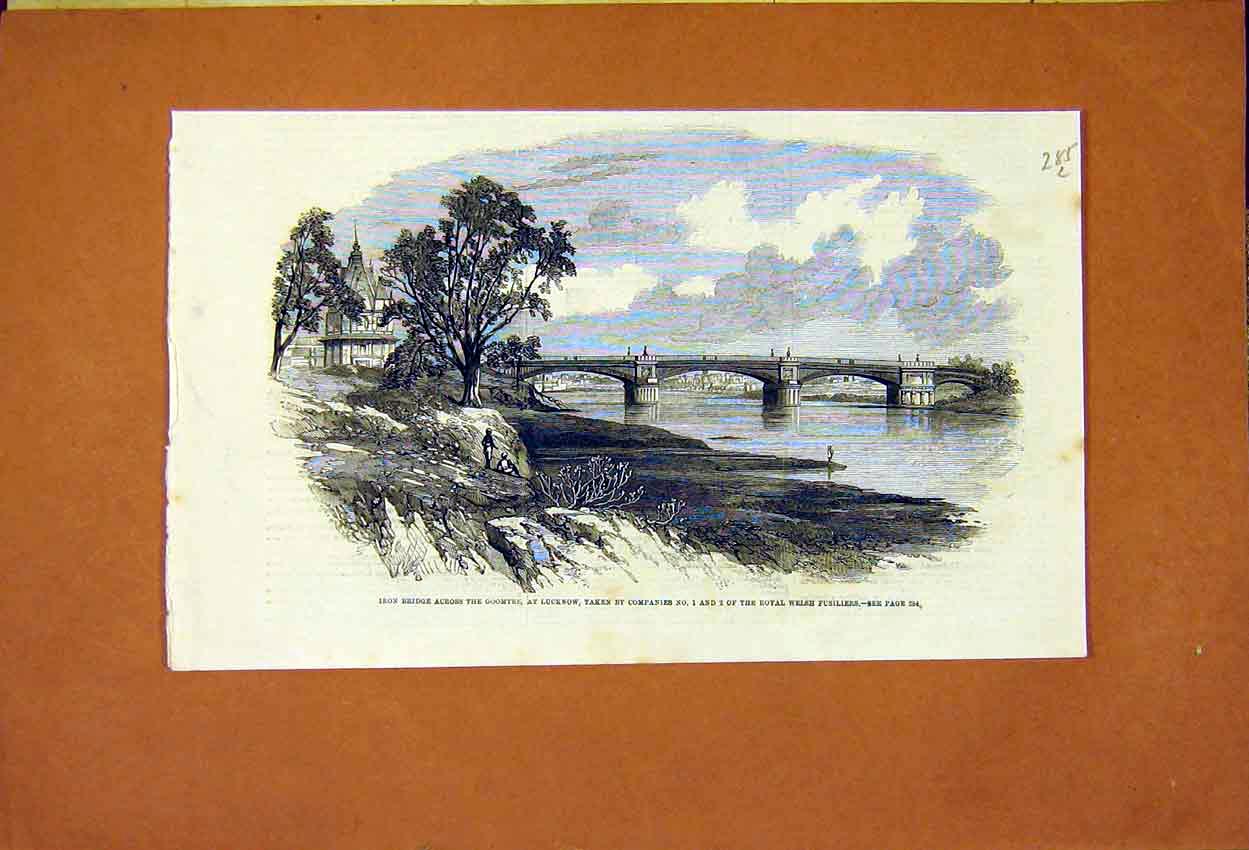 This Bridge had a very interesting history, its iron structure was imported from
The Residency originally built in 1780 was located in the northern part of the city and its building and surrounding area occupied the highest elevation dominating the city.  The surrounding buildings were connected with earthworks of mud wood and iron to form a perimeter about a mile in total length. The southern and western perimeter had buildings of great strength serving as a protection against artillery fire.  The ground between the Water Gate and the Hospital was protected by a ditch and a low embankment of earth whose height was increased till breast level with the help of sandbags. The ground towards the western side was rugged and sloped down towards a ravine which flowed south to north into the Gumti. Many buildings towards the east and south outside the Residency perimeter area were as close as 25 yard from the perimeter. The three sides of the Residency Area Defences were surrounded by native houses which nullified the possibility of attacking in deployed formation but were excellent for snipers and sharpshooters. Only the northern side was open and afforded space for forming up to mount an assault on the Residency Defences. The Redan Battery on the northern side was primarily against a Sepoy assault from the north. This battery jutted out from the alignment of main defences like a bastion to enable flanking fire against any force assaulting the Residency. This About 150 yards south of the Redan Battery was the Residency building itself where 50 European Troops were located as a reserve. The Hospital to the east of Water Gate had three mortars. The Bailie Guard was again covered by three guns. Two guns were located in the Fayrer's House area and four to cover the post office area. The Cawnpore Battery had two nine pounders and The Gubbin's Siege of Residency from July to September 1857 A modern British author in the habit of forever magnifying Sepoy strength placed the strength of the Residency's besiegers at between eight to ten thousand392. However, Fortescue393 places the Sepoy strength at 6,000 though still being reinforced; against British strength of about seventeen hundred. The Sepoy regiments retained their military formation and in addition were reinforced by soldiers from What hampered the Sepoys and which proved to be the ultimate salvation of the British was lack of experienced leadership. Instead of concentrating artillery fire on vulnerable points of the Residency defences which could easily be breached they kept on firing haphazardly and also did not bother to coordinate their fire with the assaults. Instead the Sepoys resorted to driving underground mines to breach the Residency defences. However, this method was more time consuming and less effective than direct artillery fire. An interesting part of the siege were the Sikhs inside the Residency who kept contact with the Sepoys and smuggled Opium inside the Residency which was used by the besieged troops in plenty394)! The first important event of the siege was the death of Sir Henry Lawrence. He died due to wounds received from an 8 inch shell on 4th July. Major Banks succeeded him as Chief Commissioner and Colonel Inglis of 32nd Foot assumed the military command. However, Inglis became both civil as well as military commander after Major Banks was killed by a Musket shot on 21st July. Another interesting aspect of the siege were the Sepoy sharpshooters most famous of whom was one African from Oudh's kings disbanded Army named by the Britishers as Bob the Nailer (because he used to put nails in his musket shots). A special mine was dug by British to destroy the House which this marksman used as his post as a result of which he was killed on 21st August, Dr. Brydon the only survivor of the Kabul Brigade of First Afghan war to reach Jalalabad was also one of the Residency Garrison members 396! The Sepoys attempted to drive underground mine galleries to create a breach and the British led by Captain Fulton of Engineers did efficient countermining. On 20th July the Sepoys succeeded in blowing a mine but missed the Redan Battery by about hundred feet. Thus their subsequent assault based on the mistaken premise that they had effected a breach in the Redan Battery area on 20th July was repulsed. On night of 23rd July Angad Tewari a Hindu pensioner whose fees per trip were 500 Pounds Sterling397 (Refers - Ibid. Page 176). brought the news to the Residency about Sir Havelock's relieving force's capture of  Meanwhile Colonel Inglis firmly curbed an attempt by a civil servant Gubbins to the claim that as senior civil servant he was the acting Chief commissioner of On 10th August the Sepoys succeeded in exploding an underground mine below the Sikh Square 100 yards west of Cawnpore Battery and in creating a breach through which they made a determined assault. However, the Sepoys were again repulsed with heavy losses. On 18th August another underground mine breach was created but the Sepoy assault was again repulsed. Further assaults were attempted till 5th September but with little success till news of These were the ex King Wajid Ali Shah's elder brother Mustafa Ali Khan, two Mughal Princes Mirza Mohammad Shikoh and Mohammad Humayun Khan, Nawab Rukn-ud-Daula and the Raja of Tulsipur. The Sepoys did not spare any nook or corner of the Residency area with their artillery and musket fire save the rooms north of the Hospital area where these prisoners were lodged399! On 23rd September the besieged Garrison heard the sound of Havelock's relieving force's gun from the direction of Chapter Nine Sir Henry Havelock (1795-1857) had forty one years of service and was a veteran of 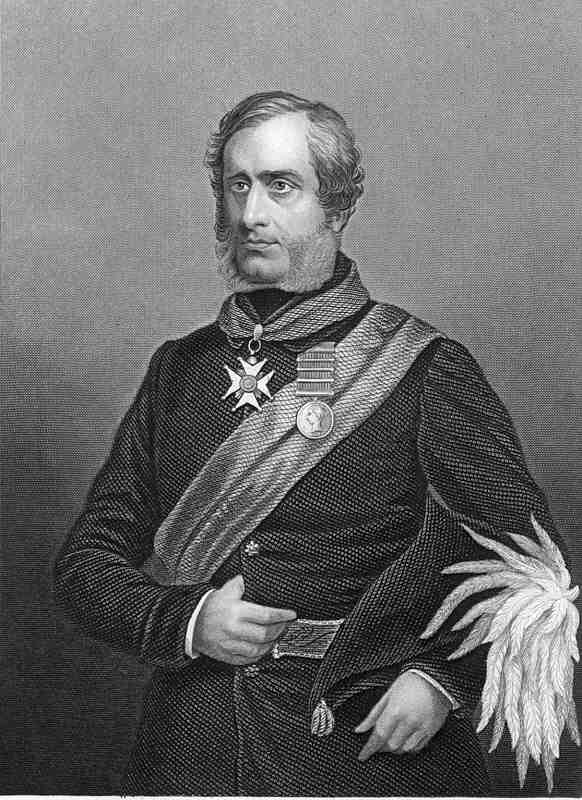  On 30th June he despatched Major Renaud with a force of 800 men on towards Thereafter, On 19th July he sent a force to capture Bithur near
On 26th July he reached Mangalwar about five and half miles north of   On 4th August, In the meantime Sir James Outram had been appointed commander of both   However Outram was still travelling on route from  The Gwalior Contingent numbering 8,000 men had raised the standard of rebellion on 14th June. Since then it had remained at Morar 4 miles from In addition another Sepoy Force was present at Farkhabad and was likely to threaten Outram (1803-1863) who was younger in age from He also had led the successful expedition to  In actual practice, however, Outram continued interfering with Havelock's exercise of command which irritated Havelock and at times made the pace of conduct of British operations slow and conusing411. for the relief of On 22nd The route finally selected was via Char Bagh Bridge after crossing which a road was to be adopted which turned east towards the canal and went northwards along the canal till open country was reached near Sikandar Bagh and subsequently turning westwards to finally reach the Residency via the open space between Kaisar Bagh Palace and the Gumti River. The Sepoys devoid of even rudimentary tactical common sense or insight were on the other hand expecting  On the morning of 25th  They encountered little opposition till they reached the Begum Kothi where they were again showered by a hail of musket and artillery fire. They were now about a mile from the Residency. Tough fighting continued as the British advance inched forward till they reached  Here another segment of the British force which had lost their way in the streets joined them. At this juncture Outram proposed a halt but
By nightfall  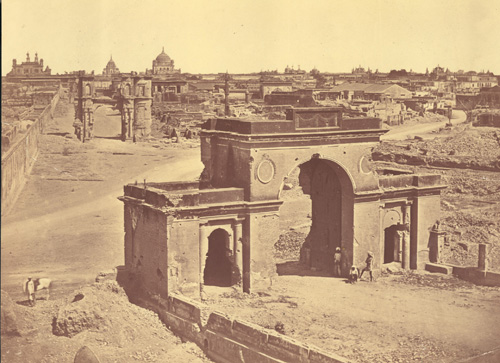 
| |||||||||||||||||||||||||||||||||||||||||||||||||||||||
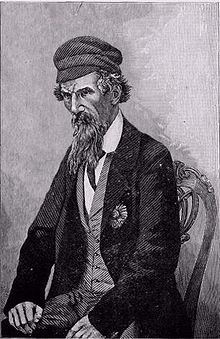


Chapter  Ten Sir Colin Campbell’s Final Relief and Evacuation of Sir Colin Campbell (1792-1863) (subsequently Lord Clyde) was a soldier of considerable experience. Being a man of limited  means he had struggled upwards on his own steam which was no mean achievement in an age when Commissions of almost all ranks could be bought! 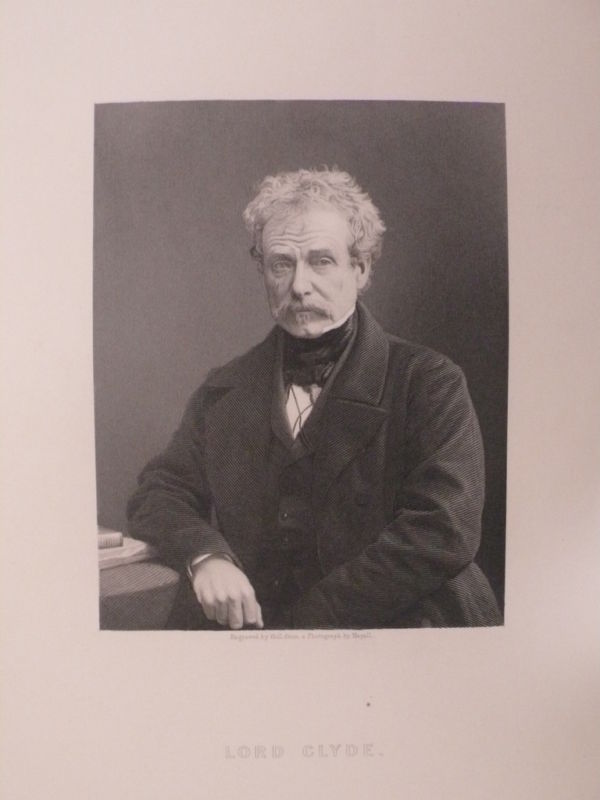 Aged 65 and with 49 years of service Campbell started with the Peninsular War against Napoleonic France, and subsequently took part in the Anglo-American War of 1814, Opium War against China, The Sikh Wars (Notably at Battle of Chillianwala where he was commanding the Left Division), Expeditions against Frontier Tribes, and most notably at the Crimean War where he was commanding the Highland Brigade during the victorious Battle of Alma417.  The strategic situation at this moment was complicated as well as critical. On one side was the Lucknow Residency Garrison which though even after being reinforced by  This Force was likely to threaten   On 10th November Kavangah a British Civilian Clerk from the Residency Garrison in native disguise with a native spy reached  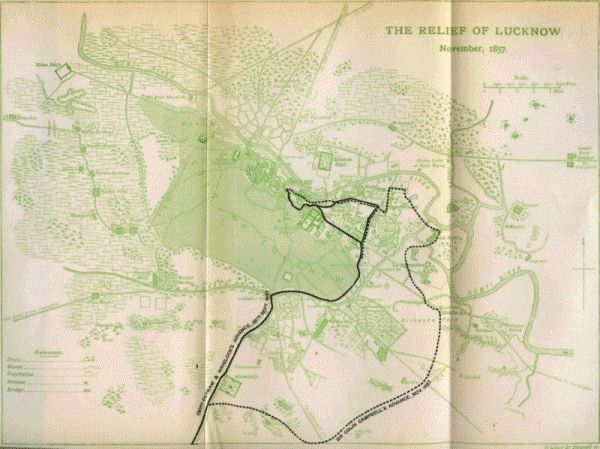 The Sepoys were deceived by British feint demonstrations made towards the Char Bagh on the previous day.
The breach was then stormed by 53rd Highlanders, 93rd Highlanders and 4th Punjab Infantry (A famous Battalion belonging to the Piffer Group). It was here that a man belonging to 4th Punjab Infantry thrust his hand into a gate about to be closed by the defending Sepoys. The gate due to this brave man could not be closed, and though his hand was badly injured facilitated the storming of this gate. 2,000Â (Refers - Ibid) dead bodies of Sepoys were subsequently counted in the Sikandar Bagh. |